
Germany is often associated with medieval towns, deep forests, and scenic river valleys, but one of the most striking features of its landscape is the extraordinary number of castles scattered across the country. From dramatic hilltop fortresses to elegant royal residences, these landmarks tell stories that stretch back many centuries. Exploring Germany’s most beautiful castles is not only about architecture. It is about discovering the regions, traditions, and legends that shaped the country over time.
Across Bavaria, the Rhine Valley, Baden-Württemberg, and several other regions, travelers encounter castles that look as if they belong in a fairy tale. Some were built to protect strategic trade routes, while others became prestigious residences for noble families and kings. Today many of these castles remain open to visitors, offering panoramic views, historic exhibitions, and a unique atmosphere that connects the past with the present.
This guide explores several castles that stand out for their beauty, history, and location. Some are world-famous, while others are hidden among forests or perched above rivers. Together they reveal why Germany’s most beautiful castles continue to fascinate travelers from around the world.
Why Germany Is Home to So Many Castles
Travelers are often surprised by how many castles appear across the German landscape. The reason lies deep in the country’s medieval history. For centuries, the territory that is now Germany was divided into many independent duchies, bishoprics, and noble states. Each region had its own rulers, armies, and fortified residences. Castles were built to defend territory, control trade routes, and demonstrate political power.
Rivers such as the Rhine, Moselle, and Neckar became especially important during the Middle Ages. Merchants transported wine, salt, textiles, and other valuable goods along these waterways. Nobles constructed fortresses on hills overlooking the rivers in order to monitor traffic and collect tolls. Over time, some of these fortifications evolved into impressive residential castles surrounded by villages, vineyards, and forests.
Because of this fragmented political landscape, the number of historic castles Germany developed over the centuries became truly remarkable. Even today, travelers can find castles in nearly every region, each reflecting a different chapter of German history and architecture.
Several key factors explain why castles became such a defining feature of the country:
- the political division of the German territories during the Middle Ages
- strategic trade routes along rivers like the Rhine and the Moselle
- competition between noble families and regional rulers
- the need to protect towns, trade routes, and agricultural lands
As a result, Germany developed one of the richest castle landscapes in Europe. Some structures remain fully preserved, while others appear as romantic ruins that blend naturally with forests, cliffs, and river valleys.
The Most Beautiful Castles in Germany
Germany’s castle landscape is incredibly diverse. Some castles rise dramatically above valleys and rivers, while others are hidden in forests or surrounded by historic towns. Each region has its own architectural style and historical background, which means visiting castles across the country can feel like traveling through several different eras of European history.
Some of the most impressive castles were built as defensive fortresses during the Middle Ages. Others later evolved into elegant residences for kings, princes, and noble families. Today these landmarks attract visitors not only because of their history but also because of their breathtaking locations. Hilltops, river cliffs, and mountain ridges often provide spectacular views of the surrounding landscapes.
Many travelers searching for the best castles to visit in Germany quickly discover that the country offers a remarkable variety of options. From iconic royal palaces in Bavaria to mysterious medieval fortresses in the Rhine Valley, each castle tells a unique story about the region in which it stands.
The castles below represent some of the most fascinating and visually striking destinations in the country. Each of them highlights a different aspect of Germany’s architectural heritage and cultural history.
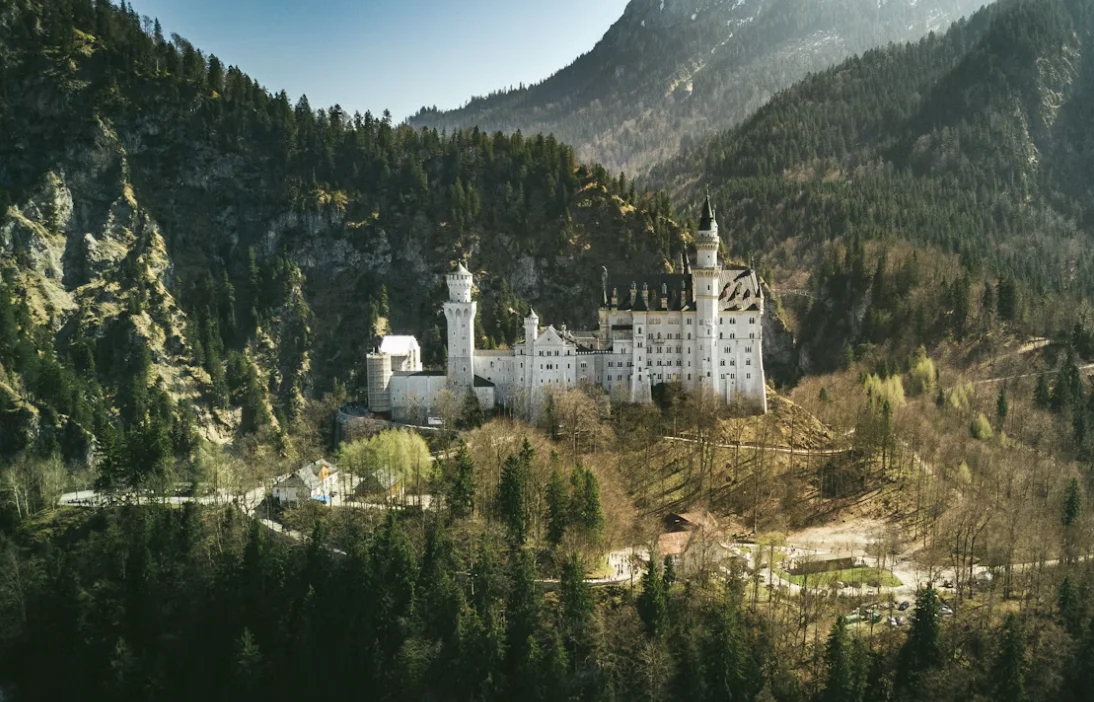
Neuschwanstein Castle
Neuschwanstein Castle is one of the most recognizable landmarks in Europe and a symbol of romantic architecture in southern Germany. Rising above forests and alpine lakes near the town of Füssen in Bavaria, the castle looks almost like something from a storybook. Its slender towers, white limestone walls, and dramatic mountain backdrop create a scene that attracts millions of visitors every year.
The castle was commissioned in the nineteenth century by King Ludwig II of Bavaria, who envisioned a residence inspired by medieval legends and heroic sagas. Unlike traditional fortresses, Neuschwanstein was designed as an artistic retreat rather than a military structure. Its interiors reflect themes from German mythology and the operas of Richard Wagner, making it one of the most famous examples of fairy tale castles Germany is known for today.
Visitors exploring the castle today can walk through ornate halls, admire panoramic alpine views, and discover one of the most photographed viewpoints in Bavaria. The nearby Marienbrücke bridge offers a breathtaking perspective of the castle rising above the valley, while the surrounding trails and lakes make the area ideal for a full day of exploration.
Good to Know
- Location: Bavaria, near the town of Füssen
- Century: 19th century (built by King Ludwig II)
- Known for: romantic architecture and fairy-tale appearance
- Best viewpoint: Marienbrücke bridge overlooking the castle
- Best time to visit: spring and early autumn for clear mountain views
Read Also: Best Cities to Visit in Germany – Complete Travel Guide
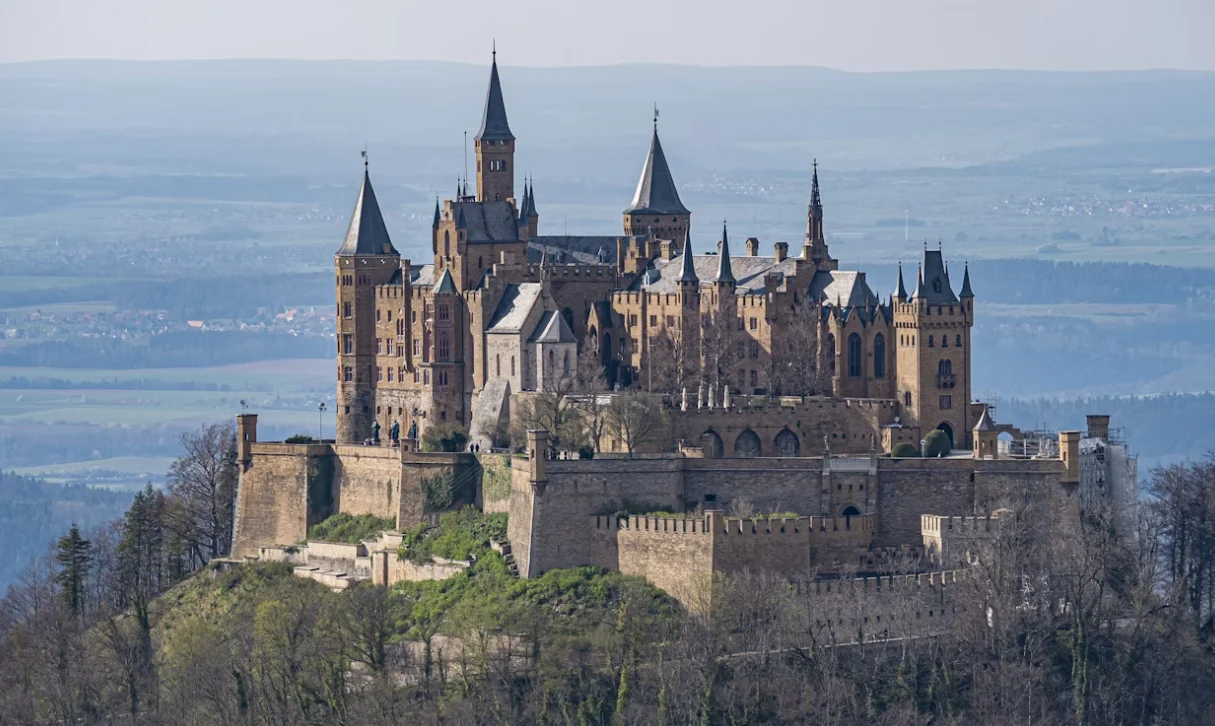
Hohenzollern Castle
Hohenzollern Castle stands high above the Swabian countryside in Baden-Württemberg, dramatically positioned on top of Mount Hohenzollern. Surrounded by rolling hills and forests, the castle appears almost suspended above the landscape. Its towers, fortified walls, and sweeping views make it one of the most visually striking castles in southern Germany.
The site has a long history connected to the powerful House of Hohenzollern, a royal dynasty that once ruled Prussia and later became German emperors. The current structure dates mainly from the nineteenth century and was rebuilt in a romantic neo-Gothic style. Although earlier fortresses existed on the mountain for centuries, the present castle reflects the royal ambitions and architectural tastes of that era.
Today visitors can explore richly decorated halls, royal chambers, and exhibitions that present the history of the Hohenzollern family. From the castle terraces, panoramic views stretch across the Swabian Alps, especially on clear days when the surrounding countryside becomes fully visible. The dramatic setting and historic significance make Hohenzollern one of the most memorable castles to visit in southern Germany.
Good to Know
- Location: Baden-Württemberg, near Hechingen
- Century: current structure rebuilt in the 19th century
- Known for: hilltop location and royal Hohenzollern history
- Best viewpoint: castle terraces overlooking the Swabian countryside
- Best time to visit: late spring and early autumn for clear panoramic views
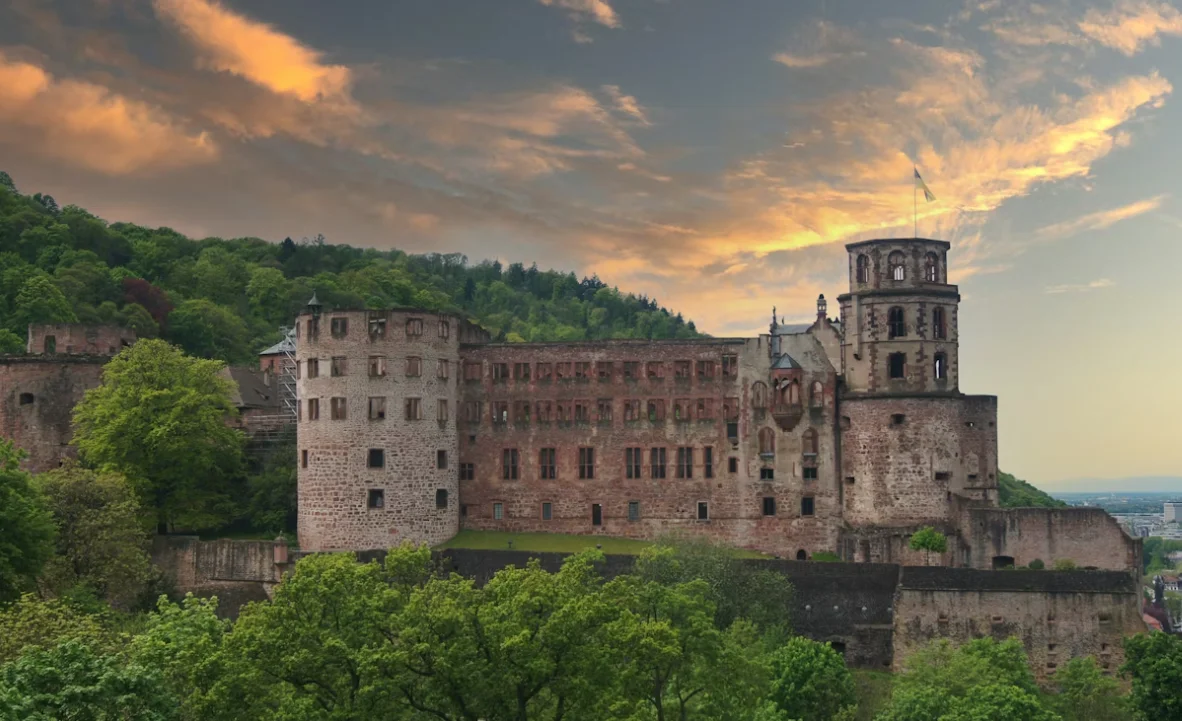
Heidelberg Castle
Heidelberg Castle rises above Heidelberg’s historic old town and overlooks the Neckar River, creating one of the most memorable views in Germany. Its red sandstone ruins, grand terraces, and elevated position give the entire site a romantic atmosphere that feels closely tied to the character of the city below. From the castle grounds, visitors can look out over rooftops, church spires, the Old Bridge, and the wooded hills surrounding the valley.
The origins of the castle date back to the thirteenth century, when it served as an important residence of the Electors Palatine. Over the centuries, the complex was expanded with Renaissance elements, elegant courtyards, and ceremonial spaces that reflected the prestige of its rulers. Although parts of the castle were later damaged during wars and periods of decline, the surviving structures still convey its former grandeur and historical importance.
Today Heidelberg Castle remains one of the most famous landmarks in the country and one of the highlights of any visit to the region. Travelers come here not only for its history, but also for its atmosphere, panoramic views, and architectural detail. The Great Terrace, the historic gardens, and the famous Heidelberg Tun, one of the largest wine barrels ever built, all add to the experience and make the castle especially rewarding to explore at a slower pace.
Good to Know
- Location: Heidelberg, Baden-Württemberg
- Century: 13th century origins
- Known for: romantic ruins and Renaissance architecture
- Best viewpoint: castle terraces overlooking Heidelberg’s old town and the Neckar River
- Best time to visit: spring and autumn for clear views of the Neckar Valley
Read Also: 12 Beautiful Cities Across Germany Worth Visiting
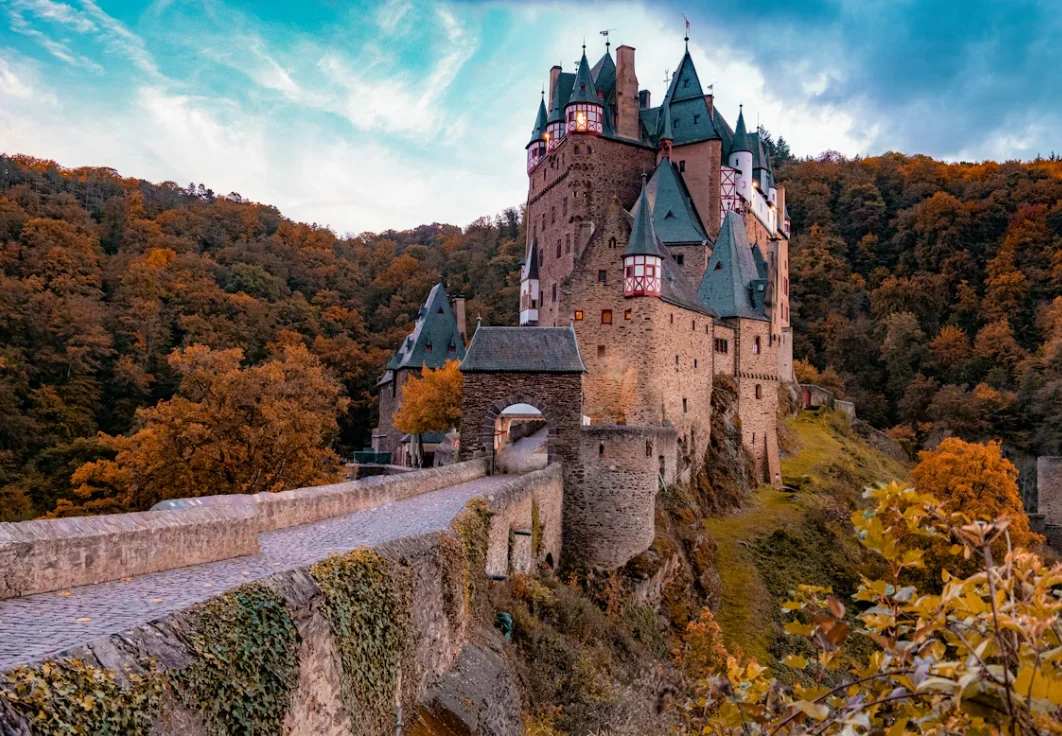
Burg Eltz
Hidden deep within the forests of the Eifel region, Burg Eltz is often described as one of the most enchanting medieval castles in Germany. Unlike many historic fortresses that were destroyed or heavily reconstructed over the centuries, Burg Eltz has remained remarkably well preserved. Surrounded by dense woodland and set above a winding river valley, the castle feels almost untouched by modern development.
The origins of Burg Eltz date back to the twelfth century, when it was built as a strategic residence for the Eltz noble family. What makes the castle particularly fascinating is that it remained in the hands of the same family for more than eight centuries. Instead of being replaced or abandoned, the castle gradually expanded as different branches of the family added their own residential sections and towers.
Today visitors reach Burg Eltz by walking through forest paths that slowly reveal the castle rising above the valley. The interior preserves original medieval halls, historic furniture, and collections of armor and artwork. Because of its secluded location and authentic architecture, Burg Eltz is widely considered one of the most impressive examples of medieval castles Germany has managed to preserve.
Good to Know
- Location: Rhineland-Palatinate, near the Moselle Valley
- Century: 12th century origins
- Known for: exceptionally well-preserved medieval architecture
- Best viewpoint: forest trail overlooking the valley approach
- Best time to visit: late spring and early autumn for scenic forest walks
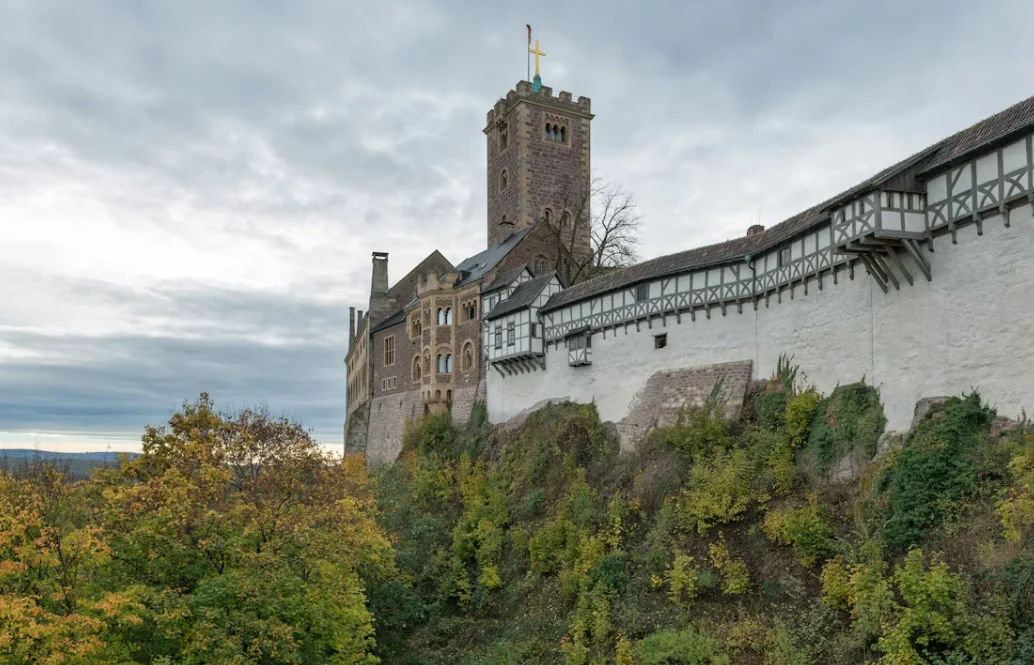
Wartburg Castle
Wartburg Castle occupies a commanding position above the town of Eisenach in the German state of Thuringia. Surrounded by forested hills and overlooking the Thuringian landscape, the castle has played a remarkable role in the cultural and political history of the country. Unlike many castles known mainly for their architecture, Wartburg is remembered for the events that took place within its walls.
The origins of the fortress date back to the eleventh century when it served as a residence for regional rulers and an important defensive stronghold. Over time it became associated with key moments in German cultural history. One of the most famous episodes occurred in the sixteenth century, when Martin Luther found refuge here and translated the New Testament into German, a work that had a profound impact on language, religion, and education throughout the region.
Today Wartburg Castle is recognized as a UNESCO World Heritage Site and stands as one of the most significant historic landmarks in the country. Visitors can explore its medieval halls, admire Romanesque and Gothic architectural elements, and enjoy wide views of the surrounding countryside. The castle remains a powerful symbol of Germany cultural heritage and continues to attract travelers interested in history, architecture, and the legacy of the Reformation.
Good to Know
- Location: Eisenach, Thuringia
- Century: 11th century origins
- Known for: Martin Luther’s translation of the New Testament
- Best viewpoint: castle terraces overlooking the Thuringian Forest
- Best time to visit: spring and early autumn for comfortable weather and clear views
Read Also: Winter Travel in Germany: Top Cities and Tips for Comfortable Travel
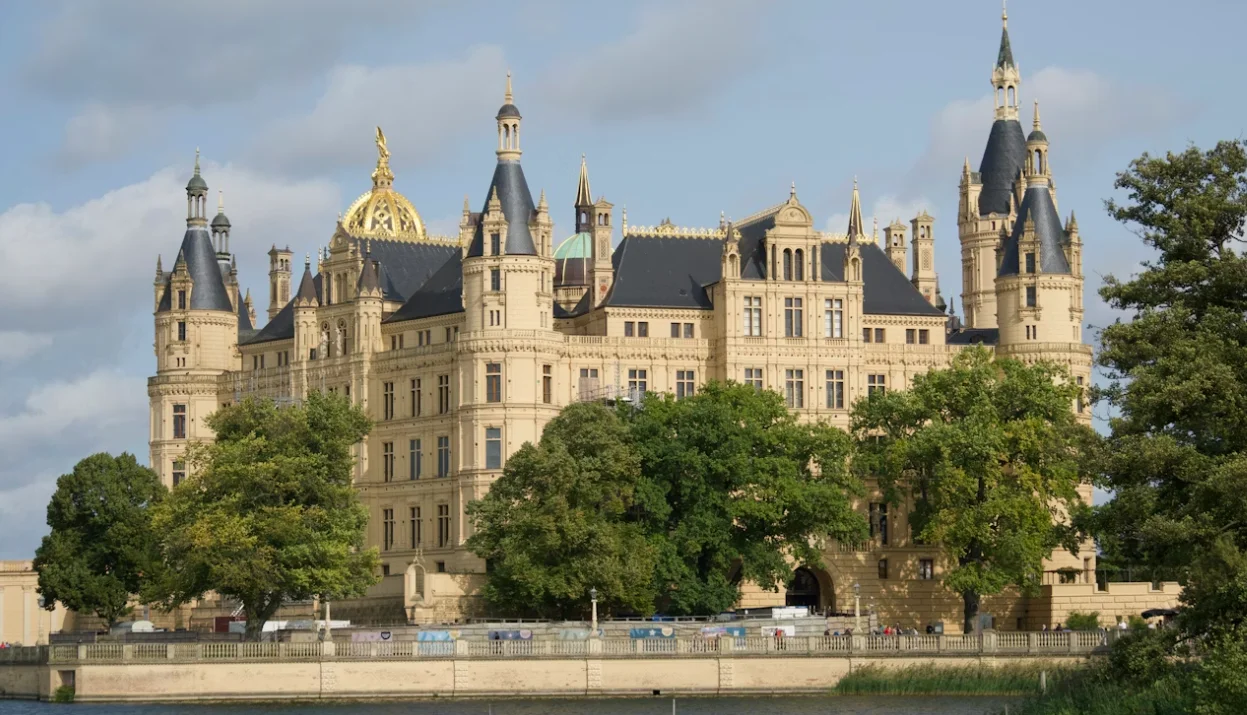
Schwerin Castle
Schwerin Castle offers a very different atmosphere compared to many medieval fortresses in Germany. Instead of rising from mountain cliffs or forest valleys, this elegant palace stands on an island in Lake Schwerin in northern Germany. Surrounded by water, gardens, and bridges, the castle looks almost like a royal residence from a classical painting.
The castle that visitors see today was largely rebuilt during the nineteenth century, although earlier fortifications existed on the same site for centuries. Its architecture blends several historical styles, including Renaissance and Baroque influences, which gives the building a distinctive and graceful appearance. Towers, domes, and golden details reflect its role as a grand ducal residence rather than a defensive structure.
Today Schwerin Castle serves as the seat of the regional parliament of Mecklenburg-Vorpommern, but it also remains one of the most visited landmarks in northern Germany. Visitors can explore historic halls, walk through landscaped palace gardens, and enjoy peaceful views across the lake that surrounds the castle.
Good to Know
- Location: Schwerin, Mecklenburg-Vorpommern
- Century: current palace rebuilt in the 19th century
- Known for: island location and palace-style architecture
- Best viewpoint: palace gardens and lakeside promenades
- Best time to visit: late spring and summer when the gardens are in full bloom
Rhine Valley Castles
The Rhine Valley is one of the most remarkable castle regions in Europe. Stretching between Koblenz and Bingen, this landscape of steep vineyards, river cliffs, and medieval towns is home to dozens of historic fortresses that once controlled trade along the Rhine. Many travelers consider this area the heart of Germany’s castle tradition.
During the Middle Ages, the Rhine served as one of the most important trade routes in Europe. Merchants transporting wine, salt, and textiles had to pass through narrow river corridors, which allowed local rulers to build fortresses and collect tolls. Over time, a chain of castles appeared along the hillsides, creating the legendary landscape that visitors still admire today.
Several castles in the region stand out for their history and dramatic setting. Marksburg Castle remains one of the few Rhine fortresses that was never destroyed, while Rheinstein Castle reflects the romantic architectural revival of the nineteenth century. Katz Castle, overlooking the river near St. Goarshausen, adds another striking silhouette to the valley’s skyline.
Exploring the Rhine Valley allows travelers to experience multiple castles within a relatively short distance. River cruises, scenic train routes, and panoramic viewpoints reveal why the Rhine Valley castles have become one of the most iconic cultural landscapes in Germany. For visitors arriving in western Germany, arranging a comfortable Dusseldorf airport transfer can make it easier to continue toward the river towns and castle routes of the region.
Good to Know
- Location: Upper Middle Rhine Valley, Rhineland-Palatinate
- Century: most castles built between the 12th and 14th centuries
- Known for: the highest concentration of castles along the Rhine River
- Best viewpoint: Lorelei cliffs and river cruise routes
- Best time to visit: late spring and early autumn during vineyard season
Famous Castles in Germany at a Glance
Germany’s castle landscape is incredibly diverse. Some castles were built as defensive fortresses during the Middle Ages, while others later became elegant royal residences. The table below highlights several of the most remarkable castles discussed in this guide and what makes each of them unique.
| Castle | Region | Century | Known For |
|---|---|---|---|
| Neuschwanstein Castle | Bavaria | 19th century | Fairy-tale architecture and alpine setting |
| Heidelberg Castle | Baden-Württemberg | 13th century | Romantic ruins overlooking the Neckar River |
| Hohenzollern Castle | Baden-Württemberg | 19th century reconstruction | Dramatic hilltop fortress and royal history |
| Burg Eltz | Rhineland-Palatinate | 12th century | One of the best-preserved medieval castles |
| Wartburg Castle | Thuringia | 11th century | UNESCO site and Martin Luther’s refuge |
| Schwerin Castle | Mecklenburg-Vorpommern | 19th century palace | Island palace surrounded by a lake |
| Rhine Valley Castles | Rhineland-Palatinate | 12–14th centuries | High concentration of medieval river castles |
Best Time to Visit Germany’s Castles
Germany’s castles can be visited throughout the year, but the overall experience often depends on the season. Weather conditions, visitor numbers, and surrounding landscapes can all change how a castle visit feels. Some castles are particularly impressive during spring and summer when gardens and forests are vibrant, while others gain a dramatic atmosphere during autumn or even winter.
Many travelers plan their castle trips between late spring and early autumn, when temperatures are comfortable and outdoor exploration becomes easier. Scenic routes through the Rhine Valley, Bavaria, and the Moselle region are especially popular during these months. Because castles are often located on hills or surrounded by nature, clear weather can make a significant difference when it comes to views and photography.
For travelers exploring Germany travel destinations, the following seasons are often considered the most rewarding for visiting historic castles:
- Spring: blooming landscapes, mild weather, and fewer crowds compared to summer.
- Summer: longer daylight hours and castle festivals held in historic courtyards.
- Autumn: colorful forests and vineyard scenery, especially in the Rhine and Moselle valleys.
- Winter: a quieter atmosphere, with some castles offering seasonal exhibitions or Christmas events.
Regardless of the season, visiting castles early in the morning or later in the afternoon often provides a more peaceful experience. These quieter hours allow travelers to appreciate the architecture, surrounding landscapes, and historic atmosphere without the busiest crowds
Read Also: Frankfurt as the Starting Point: 5 Grand Ideas for Dream Getaways
How Travelers Can Reach Germany’s Castles Easily
Many of Germany’s most impressive castles are located outside large cities, often surrounded by forests, mountains, or river valleys. While this setting is part of their charm, it also means that reaching them usually requires planning a comfortable and reliable way to travel. Fortunately, Germany’s excellent transport infrastructure makes it relatively easy to reach these historic landmarks.
Frankfurt Airport is one of the main international gateways for visitors exploring western and central Germany. From here, travelers can quickly reach destinations such as Heidelberg Castle or Burg Eltz. Booking a taxi from Frankfurt airport allows visitors to travel directly to nearby historic towns and castle regions without navigating multiple train connections.
For those heading toward Bavaria and the Alpine foothills, Munich is the most convenient arrival point. Many travelers visiting Neuschwanstein Castle begin their journey in the Bavarian capital. Using a reliable Munich airport taxi makes it easier to reach Füssen and other scenic destinations located in the mountains.
Visitors planning to explore several castle regions in one trip often find that private transfers make the journey more flexible, especially when traveling with luggage, family, or a tight itinerary.
Frequently Asked Questions
How many castles are there in Germany?
Germany is home to an estimated 20,000 castles and castle ruins. These historic structures range from medieval fortresses and defensive strongholds to romantic royal residences built in later centuries. Many of them are open to visitors today.
What is the most famous castle in Germany?
Neuschwanstein Castle in Bavaria is widely considered the most famous castle in Germany. Its fairy-tale architecture, dramatic alpine setting, and connection to King Ludwig II attract millions of visitors every year.
Which castles are best preserved in Germany?
Burg Eltz is often considered one of the best-preserved medieval castles in Germany. Unlike many historic fortresses, it was never destroyed during wars and has remained in the same family for centuries.
What is the best time to visit castles in Germany?
Spring and early autumn are usually the best seasons to visit castles in Germany. The weather is comfortable, the landscapes are colorful, and popular landmarks tend to be less crowded than during peak summer travel periods.
Can you visit several castles in one trip?
Yes, many castles in Germany are located relatively close to each other, especially in regions such as the Rhine Valley or Bavaria. With good travel planning it is possible to visit several castles during one trip and explore different historic regions of the country.
Final Thoughts
Germany’s castles are far more than historic monuments. They reflect centuries of political change, artistic ambition, and regional identity. From romantic royal residences in Bavaria to powerful medieval fortresses in the Rhine Valley, each castle reveals a different chapter of the country’s story.
Travelers who explore these landmarks often discover that the journey itself becomes part of the experience. Scenic rivers, forested hills, and historic towns surround many of the castles described in this guide. Visiting several castles in one trip can therefore feel like a journey through landscapes as rich as the history behind the walls.
Whether you are drawn to dramatic alpine settings, medieval architecture, or cultural heritage sites, the beautiful castles in Germany offer an unforgettable travel experience. Each location combines history, scenery, and atmosphere in a way that continues to fascinate visitors from around the world.
With thoughtful planning and comfortable transport, exploring these castles can easily become one of the highlights of a trip through Germany. Travelers who prefer a smooth journey between airports, historic towns, and castle regions often rely on services such as Airport Taxis when organizing their route.