
What “Boarding” Actually Means in the USA
For many travelers, boarding sounds simple — it’s the moment you get on the plane. In practice, especially in the United States, it’s a structured process that begins well before departure and follows a strict sequence that isn’t always obvious at first glance.
One of the most common misunderstandings is assuming that boarding happens close to the departure time. In reality, the boarding process in the USA often starts 30 to 45 minutes before the flight, sometimes earlier for larger aircraft or international routes. By the time many passengers think it’s “time to go,” boarding may already be halfway complete.
It helps to separate each step clearly. Check-in confirms your presence on the flight. Security clears you to enter the departure area, following standard procedures such as TSA security guidelines. The gate is where the final process happens. But boarding itself is a controlled sequence — groups are called, documents are scanned again, and passengers move toward the aircraft in stages rather than all at once.
And this is where expectations often break. You might be at the gate on time, see a crowd forming, and assume you can join whenever it feels right. In most US airports, that’s not how it works. Boarding follows a defined order, and your position in that order affects not just when you enter the aircraft, but also practical details like where you store your luggage or how long you remain in the aisle.
The difference between boarding time and departure time is not just technical — it defines how you move through the airport. Departure is when the aircraft leaves. Boarding is when your access window opens — and eventually closes. Once that sequence is underway, the pace is set by the airline, not by the passenger.
On domestic flights, the process may feel fast but still structured. On international routes, additional checks at the gate can extend the boarding sequence, even if everything seemed complete earlier. Either way, boarding in the USA is not a final step — it is a timed system that requires attention, especially in busy airports where announcements move quickly and delays are not always obvious until it’s too late.
Understanding this distinction early changes how you plan the entire departure experience. Not around when the plane leaves — but around when boarding actually begins.
Read more: Airport Boarding in Europe Explained: Timing, Groups and What to Expect
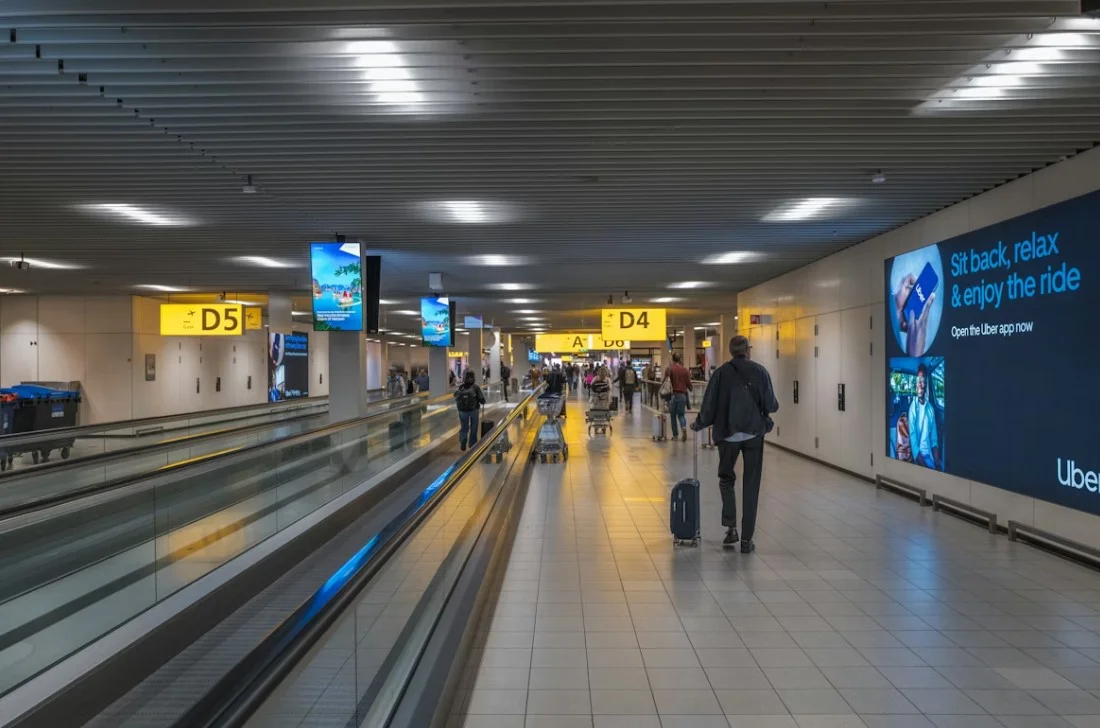
Boarding Groups in the USA: How the System Works
Once boarding begins, the process in the United States is built around a clear hierarchy. Unlike some European airports where boarding can feel more fluid, US airlines rely heavily on structured group systems to manage large passenger volumes and keep the flow predictable.
At first glance, it may look like a single queue forming near the gate. In reality, that queue is controlled by sequence. Airlines call passengers in stages — not all at once — and each stage has a defined order based on ticket type, status, or specific needs.
The process usually starts with pre-boarding. This includes passengers who need assistance, families with small children, and in some cases active military personnel. After that, priority passengers are invited — typically First Class, Business Class, and frequent flyer status holders.
Only then does the main boarding begin. Most major US airlines divide economy passengers into multiple groups, often ranging from Group 1 to Group 8 or 9, as seen in systems like the American Airlines boarding process. The exact number varies, but the principle stays the same: the higher your group, the earlier you board.
And this is where things become less intuitive. Your boarding group is not random — it is determined by a combination of factors: fare type, seat location, airline loyalty status, and sometimes even when you checked in, following structured approaches similar to the United Airlines boarding groups. Basic Economy passengers are almost always placed in the final groups, which means they board last.
Unlike open systems, you are expected to wait until your group is called. Boarding earlier is not just discouraged — in many cases, staff will ask you to step aside and wait. The system is designed to move passengers in waves, not as a continuous flow.
This structure may feel strict at first, but it serves a purpose. With larger aircraft and a strong carry-on culture, airlines need to control how passengers enter the cabin. Without this sequence, boarding would slow down significantly and create more congestion in the aisle.
How to Find Your Boarding Group
Your boarding group is always indicated on your boarding pass, whether it’s digital or printed. In most cases, it appears clearly as something like “Group 3” or “Zone 5”. Some airlines may also include it next to your seat or boarding time.
However, not all boarding passes are equally clear at first glance. In some cases, especially with mobile passes, the group number may appear in a smaller section or alongside other details. If it’s not immediately obvious, it usually reflects your fare type or seat category.
Another variation appears with airlines like Southwest, where instead of traditional groups, you are assigned a boarding position — for example, A15 or B32. This changes how the entire process works.
Boarding on Airlines Like Southwest
Southwest Airlines uses one of the most distinctive boarding systems in the United States, as outlined in the Southwest boarding process. Instead of assigned seats, passengers board based on a combination of group (A, B, or C) and position number.
For example, a passenger with A10 will board before someone with A25, and all A group passengers board before B group passengers. Once on the plane, seating is open — meaning your boarding position directly affects where you sit.
This system makes timing even more important. Boarding earlier doesn’t just mean getting on the plane faster — it means having better seat options and easier access to overhead bin space.
For travelers used to European boarding systems, this can feel unfamiliar at first. But the logic remains the same: boarding is controlled, structured, and closely tied to how the airline manages space and passenger flow inside the aircraft.
Types of Boarding Systems in the USA
| Boarding Type | Used By | How It Works | Who Boards First |
|---|---|---|---|
| Pre-Boarding | Most US airlines | Early access for specific passenger groups | Passengers needing assistance, families |
| Priority Boarding | Delta, American, United | Status or ticket-based early boarding | First Class, Business, elite members |
| Group Boarding | All major airlines | Sequential group calls (1–9+) | Higher fare and status passengers |
| Open Boarding | Southwest | No assigned seats, position-based entry | A group passengers first |
Example 1: Boarding at Los Angeles Airport (LAX)
Boarding at Los Angeles International Airport (LAX) often feels less predictable than passengers expect. The airport handles an enormous volume of domestic and international traffic, and that scale changes how the boarding experience feels on the ground. Even when the process itself is organized, the atmosphere around the gate can seem crowded, noisy, and slightly chaotic.
What makes boarding at LAX different is not the logic of the system — it’s the environment around it. Large waiting areas, multiple overlapping departures, and constant movement near the gate can make it harder for passengers to follow their group call with confidence. If you are not paying close attention, it is surprisingly easy to lose your place in the sequence or assume the line applies to everyone.
On paper, the process works like it does at most major US airports: pre-boarding first, then priority passengers, then numbered groups. In practice, the experience can feel messier. Travelers often hear announcements while still reorganizing bags, watching the boarding screen, or trying to understand whether the line in front of the gate is already moving or simply forming too early.
LAX also rewards passengers who stay close to the gate once boarding is about to begin. This is not always because the gate is hard to find, but because the rhythm can change quickly. One moment people are scattered around the seating area, and the next several groups are already being processed in sequence. If you drift too far for coffee, a restroom break, or a last-minute purchase, the process may move faster than expected.
What Makes Boarding at LAX Different
- Heavy passenger volume: crowded gate areas can make announcements harder to follow.
- Fast group progression: once boarding begins, groups may be called in quick succession.
- Mixed domestic and international traffic: the boarding atmosphere varies depending on route type and airline.
- Carry-on pressure: late boarding often means less overhead bin space.
One of the most common mistakes at LAX is assuming that being “near the gate” is enough. In reality, passengers need to stay alert to the boarding order itself. If your group is called and you miss it, you can still board later — but the experience may be less smooth. Overhead bin space may already be limited, and on busier flights that small delay becomes more noticeable than expected.
Another detail that matters here is crowd behavior. At LAX, passengers often line up before their group is called, which makes the gate area look more advanced in the process than it actually is. For first-time travelers, that can create unnecessary pressure. The safer approach is simple: watch the screen, listen for your group, and move when your turn is actually announced.
At LAX, boarding is rarely unclear in theory. The challenge is that the volume, movement, and pace around the gate can make a standard process feel more confusing than it really is. The passengers who handle it best are usually not the ones rushing first — but the ones paying attention at the right moment.
Read more: What to Do During a Long Layover at Brussels, Frankfurt, Amsterdam or Nice Airport?
Example 2: Boarding at New York JFK Airport
Boarding at John F. Kennedy International Airport (JFK) feels more structured on paper than it often does in reality. It’s one of the busiest international hubs in the United States, and that alone changes the dynamic. Multiple airlines, different boarding policies, and a constant flow of long-haul departures create an environment where the process is clear — but not always easy to follow in the moment.
Unlike smaller airports, JFK doesn’t have a single rhythm. Each terminal operates slightly differently, and each airline applies its own boarding logic. From the passenger’s perspective, that means one important thing: what worked on your previous flight may not apply here.
International departures add another layer. Even after passing through security and passport control, additional document checks can happen at the gate. Boarding passes are scanned again, IDs may be verified, and in some cases staff manually review travel documents before allowing passengers through. It doesn’t happen on every flight — but when it does, it slows the flow.
And this is where timing becomes less intuitive. You might arrive at the gate well in advance, see that boarding hasn’t fully started, and assume there is plenty of time. Then the process begins — and instead of moving steadily, it moves in bursts. A few minutes of waiting, then multiple groups called almost back-to-back.
What Makes Boarding at JFK Different
- Multiple boarding systems: different airlines, different group structures.
- Additional gate checks: especially on international routes.
- High passenger density: queues can form quickly even before boarding begins.
- Unpredictable pacing: periods of waiting followed by rapid progression.
One subtle challenge at JFK is perception. The queue may look long, but that doesn’t always mean boarding is slow. Often, it’s simply a large group being processed in stages. At the same time, if you’re not paying attention, your group can be called and cleared faster than expected.
Another detail many travelers overlook: gate areas can feel crowded long before boarding actually begins. People gather early, stand near the entrance, and create the impression that the process is already underway. In reality, those early lines don’t reflect the actual boarding order.
And then there’s timing pressure. On international flights especially, airlines tend to follow stricter cut-offs. Once boarding reaches its final stage, the window narrows quickly. If you step away — even briefly — it can be harder to rejoin the flow at the right moment.
Missing your group at JFK doesn’t mean you won’t board. But it does change the experience. The cabin may already be filling, overhead bin space becomes limited, and the process feels less controlled from your side.
At JFK, the system itself is not the problem. The complexity comes from scale, variation, and timing. The passengers who navigate it best are usually the ones who treat each flight as its own system — not something predictable based on the last airport they visited.
Example 3: Boarding at Miami Airport (MIA)
Boarding at Miami International Airport (MIA) often feels simpler at first — and that’s exactly why it can be misleading. Compared to larger or more complex hubs, the layout is easier to navigate, and the gate areas tend to feel more open. But once boarding begins, the pace can change quickly.
Miami handles a high volume of leisure and international travel. That means more families, more carry-on luggage, and often fuller flights. On the surface, everything looks relaxed. People arrive early, gather near the gate, and wait. Then boarding starts — and the process tightens.
This is where timing starts to matter more than expected. Groups are called in sequence, just like in other US airports, but the density of passengers means each group takes longer to clear. And once that movement starts, it doesn’t slow down for late arrivals.
What Makes Boarding at MIA Different
- High leisure traffic: more passengers traveling with luggage and families.
- Full flights: especially on international and seasonal routes.
- Slower early movement: queues build before the process accelerates.
- Strong carry-on pressure: overhead bin space fills quickly.
Overhead bin space is one of the biggest practical factors at MIA. Many travelers bring cabin luggage, and by the time later boarding groups are called, available space can already be limited. This is not unusual — but it does catch people off guard.
If you board late, you may still get on the aircraft without issue. But your bag might not. In some cases, staff will need to check it at the gate, which adds a small delay and changes your arrival experience on the other side.
There’s also a behavioral pattern here that’s worth noticing. At MIA, passengers often form lines early — sometimes well before their group is called. It creates a sense of urgency that doesn’t always match the actual process. People move forward, then pause, then move again.
It looks like progress. It isn’t always.
For first-time travelers, this can be confusing. The line grows, the gate looks active, and it feels like you should already be standing there. In reality, the system is still following the same structure: wait for your group, then move.
At Miami Airport, boarding is not complicated — but it is dense. The difference is subtle. The process works as expected, but the number of passengers, the amount of luggage, and the pace of movement make it feel more pressured than it actually is.
And like in other major US airports, the passengers who have the smoothest experience are usually not the ones reacting to the crowd — but the ones following the sequence.
Read more: Travel Disruptions in Europe: Strikes, Delays and Smart Planning for Your Trip
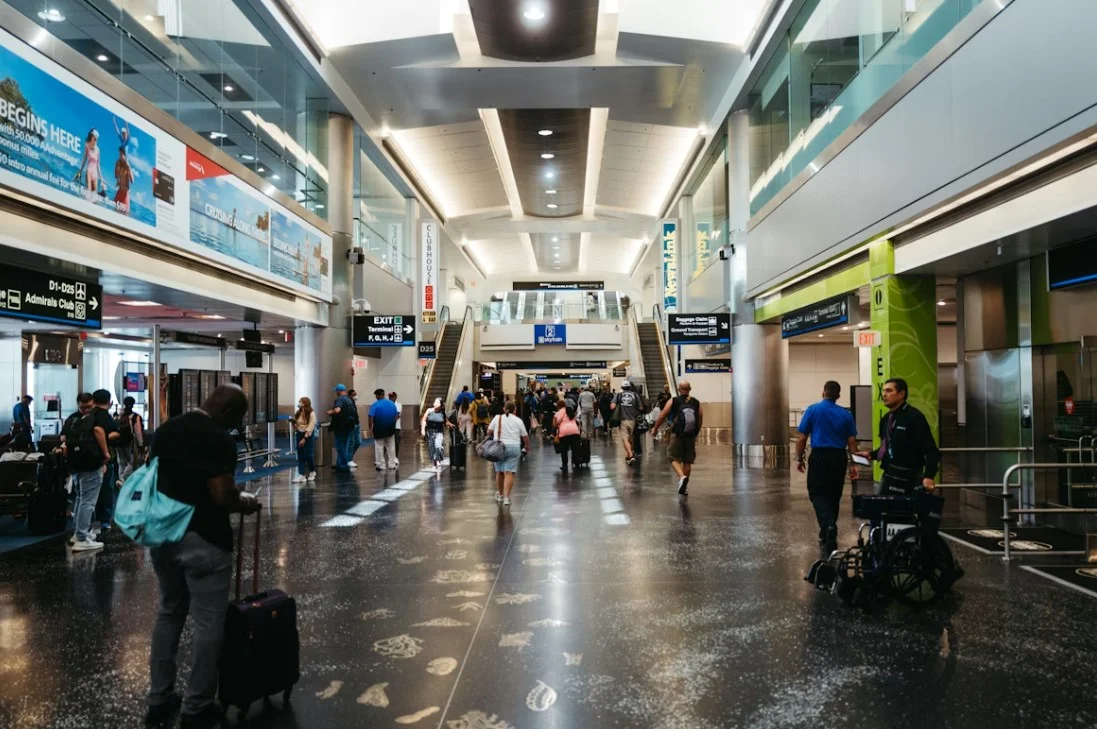
How the Boarding Process Actually Flows in the USA
After looking at individual airports, the pattern becomes clearer. The boarding process in the USA is not random — but it rarely feels linear from a passenger’s perspective.
What most travelers expect is a simple sequence: announcement, line, boarding. In reality, the process unfolds in layers. Some parts move quickly, others pause, and the overall flow depends on how each stage is managed at the gate.
It helps to think of boarding not as a single moment, but as a short chain of events. Each step has its own timing, and small delays or misunderstandings early on tend to affect everything that follows.
For example, passengers often hear the first announcement and assume boarding has fully started. In practice, that may only apply to pre-boarding or priority groups. A few minutes later, the main sequence begins — and that’s where attention really matters.
Another detail is how quickly things can shift. There may be a pause between early groups, and then suddenly several groups are called one after another. If you’re not following the announcements closely — or watching the gate screens — it’s easy to miss that transition point.
And then there’s the final phase. Once boarding reaches its last groups, the process tends to accelerate. Fewer passengers, less stopping, and a faster movement toward gate closure. That’s where timing mistakes usually happen.
Boarding Flow in the USA Explained
| Step | What It Means | What Passengers Often Think | Reality |
|---|---|---|---|
| Pre-Boarding | Early access for selected groups | Boarding has already started for everyone | Only specific passengers are allowed at this stage |
| Group Boarding | Main passenger sequence | You can join the line anytime | You must wait for your group to be called |
| Mid-Boarding Phase | Several groups processed | There is still plenty of time | The process may accelerate quickly |
| Final Boarding | Last passengers entering | A few minutes are still available | Gate closure can happen soon after |
This structure is consistent across most US airports, even if the environment feels different. Whether you are in Los Angeles, New York, or Miami, the logic remains the same — the system moves in stages, not as a continuous flow.
Understanding that flow makes a difference. Not just for timing, but for how you position yourself at the gate. When to stand, when to wait, and when to move.
Boarding is not about being early or late. It’s about moving at the right moment.
Common Mistakes Passengers Make Before Boarding in the USA
Most boarding issues in the USA don’t happen because passengers are late. They happen because people misread the situation at the gate.
On the surface, everything looks simple. The gate is open, people are standing, announcements are happening. But the details matter — and this is exactly where small mistakes start to add up.
The first and most common one is ignoring boarding groups. Travelers hear the announcement, see movement, and assume it’s time to go. In reality, it might not be their turn yet. The system doesn’t work as a single queue — it works in sequence.
Standing too early is another common mistake. It feels natural to line up as soon as people start gathering, but in many US airports, early lines don’t reflect the actual boarding order. You end up waiting longer, often in the aisle, without any real advantage.
Then there’s the opposite problem — not paying attention at all. Passengers stay seated, check their phones, or walk away briefly, assuming boarding will take time. Sometimes it does. Sometimes it doesn’t. When several groups are called in quick succession, it’s easy to miss your moment.
Gate changes are another detail people underestimate. They don’t happen on every flight, but when they do, they are often updated quietly on screens rather than announced loudly. If you’re not checking the display regularly, you can end up waiting at the wrong gate while boarding happens somewhere else.
And then there’s luggage.
Carry-on space is limited — more than many travelers expect. In the US, most passengers bring cabin bags, and overhead bins fill up quickly. If you board late, there may simply be no space left near your seat. In that case, your bag may be taken at the gate and placed in the hold.
It’s not a major issue — but it changes the experience. You wait longer after landing, and you lose some control over your timing.
Missing your boarding group doesn’t stop you from flying. You can still board later. But the difference is noticeable: fewer seat choices (on open seating airlines), less space for luggage, and a slightly more rushed entry into the cabin.
Finally, there’s one assumption that causes more problems than anything else.
Thinking that departure time is the deadline.
It isn’t. By the time departure approaches, boarding is already closing. And once the final stage begins, the process moves quickly. There’s very little flexibility at that point.
Most mistakes don’t come from lack of experience. They come from treating boarding as something informal — when in reality, it’s one of the most structured parts of the entire airport process.
When Should You Be at the Gate in the USA?
The question sounds simple. In reality, it’s where many timing mistakes begin.
Most travelers still think in terms of departure time. The plane leaves at 10:40 — so being at the gate around 10:20 should be enough. In the United States, that assumption often doesn’t hold.
Boarding starts earlier than people expect. On many domestic flights, the process begins 30 to 45 minutes before departure. On international routes, it can start even earlier. And once it starts, it doesn’t wait for late arrivals to catch up.
This doesn’t mean you need to stand at the gate for an hour. But it does mean one thing: you need to be there before your group is called, not when you think boarding is “almost done.”
Timing here is less about arriving early — and more about arriving correctly.
Another detail that often goes unnoticed is how different boarding phases behave. Early stages may move slowly, especially during pre-boarding or priority access. It feels like there’s time. Then the main groups begin, and the pace changes. Faster. More continuous. Less forgiving.
And then, almost without warning, the final phase starts.
That’s where the window narrows.
Passengers who arrive at the gate at that point are not technically late — but they are no longer in control of the timing. The process is already moving toward closure.
Recommended Gate Arrival Time in the USA
| Flight Type | Recommended Gate Arrival | Why |
|---|---|---|
| Domestic Flights | 30–45 minutes before departure | Boarding starts early and moves in stages |
| International Flights | 45–60 minutes before departure | Additional checks and longer boarding process |
| Peak Travel Periods | +15 minutes | Higher passenger volume and slower early phases |
| Basic Economy Tickets | Earlier recommended | Last boarding groups with less flexibility |
These times are not strict rules — but they reflect how the system actually behaves. The key idea is simple: your position in the boarding sequence matters more than the departure time itself.
Arriving too early just means more waiting. Arriving too late means adjusting to a process that is already moving without you.
The most comfortable position is somewhere in between. Close enough to follow your group, early enough to move without pressure.
Because once boarding reaches its final stage, there’s very little room left to adjust.
Read more: Summer 2025 Travel Tips: The Smart Way to Book Airport Transfers Across Europe
Boarding Time vs Departure Time in the USA
At first glance, the times on your ticket look straightforward. One number for departure, sometimes another for boarding. Simple.
In practice, this is one of the most misunderstood parts of the entire airport process.
The departure time is not when you should be arriving at the gate. It’s the moment the aircraft is scheduled to leave. By that point, boarding is already finished, the doors are closed, and the process has moved beyond passenger control.
Boarding time, on the other hand, is when your access window opens. This is when passengers are called in groups, documents are checked, and the sequence begins. It is not a suggestion — it is a structured process that moves forward whether you are ready or not.
And the gap between these two moments matters more than most people expect.
On many flights in the USA, boarding closes 10 to 15 minutes before departure. Sometimes earlier on larger aircraft or international routes. That means the last phase of boarding — the one most passengers rely on — is actually much shorter than it appears.
This is where timing mistakes happen.
Passengers see the departure time, calculate backwards, and assume they have a comfortable margin. In reality, they are aligning themselves with the wrong reference point. By the time they reach the gate, the process may already be in its final stage.
Once boarding reaches that stage, it moves quickly. Fewer pauses, fewer checks, and a clear progression toward closure. There is no “waiting for the last few passengers” in the way many people expect.
And this is the detail that changes everything.
Boarding is not built around departure time. It’s built around cut-off points.
Boarding Time vs Departure Time Explained
| Term | What It Means | What Passengers Often Think | Reality |
|---|---|---|---|
| Departure Time | Scheduled time the aircraft leaves | Latest moment to arrive at the gate | By this time, boarding is already closed |
| Boarding Time | Start of the boarding process | Flexible arrival moment | Defines when you must be ready |
| Final Boarding | Last passengers entering | There is still time left | The process is close to ending |
| Gate Closing | Cut-off point for entry | Staff may allow late arrivals | Access is usually denied |
The difference between these terms is not technical — it’s practical. It determines whether you move through the process smoothly or find yourself rushing at the last moment.
Experienced travelers rarely plan around departure time. They plan around boarding — and more specifically, around when boarding ends.
That small shift in thinking changes everything.
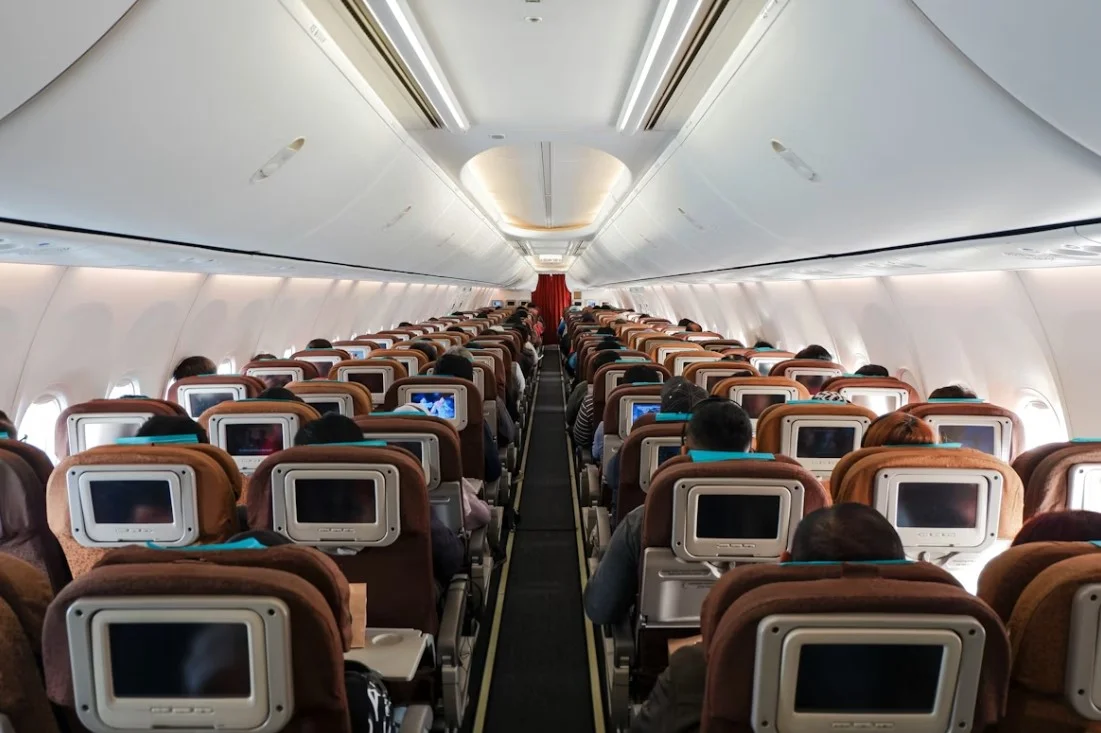
Why Boarding Feels More Structured in the USA
At a glance, boarding in the USA doesn’t look very different from other parts of the world. Passengers gather, announcements are made, and people move toward the aircraft in groups.
But the feeling is different. More structured. More controlled. And sometimes — more rigid.
This isn’t accidental. It comes from a combination of factors that shape how airlines manage passengers at scale.
First, aircraft size. Many domestic and international flights in the United States operate with larger passenger loads. More people means more coordination, especially during boarding, where every delay affects turnaround time.
Then there’s the carry-on culture.
Passengers in the USA tend to travel with more cabin luggage. Overhead bin space becomes a shared resource that needs to be managed carefully. Boarding groups help control how quickly that space fills and reduce congestion inside the aircraft.
Another factor is the airline model itself. Frequent flyer programs, ticket tiers, and upgrade systems all influence boarding order. The process is not only about efficiency — it also reflects status and fare structure.
And finally, there’s timing discipline. Boarding is designed to fit into a tight operational window. Aircraft need to depart on schedule, and delays at the gate affect everything that follows. The system is built to keep things moving, not to adapt to individual timing.
Put together, these elements create a process that feels more segmented than in many European airports. Not necessarily more complicated — but more defined.
Each passenger has a place in the sequence. And the experience depends on how well that sequence is understood.
This is why boarding in the USA can feel unfamiliar at first. Not because the rules are difficult — but because the system expects you to follow them closely, even when the environment around the gate feels informal.
Frequently Asked Questions About Boarding in the USA
How do boarding groups work in the USA?
Most US airlines board passengers in a set order rather than as one open line. The process usually starts with pre-boarding and priority passengers, followed by numbered or named groups, while Basic Economy travelers often board later in the sequence.
When does boarding usually start in the USA?
On many domestic flights, boarding begins around 30 to 45 minutes before departure. International flights often start earlier, especially when additional checks are required at the gate.
How can I find my boarding group?
Your boarding group is normally shown on your boarding pass, whether it is printed or digital. It may appear as a group number, a zone, or, on some airlines such as Southwest, as a boarding position like A20 or B35.
What happens if I miss my boarding group?
You can usually still board later, but the experience may be less convenient. Overhead bin space may already be limited, and on airlines with open seating, your seat options may be reduced as well.
Can I board before my group is called?
In most cases, no. Gate agents usually follow the airline’s boarding order and may ask passengers to step aside if their group has not been called yet.
Why is overhead bin space such a problem on US flights?
Many passengers in the USA travel with cabin bags, especially on domestic routes. As a result, overhead bins can fill quickly, particularly on full flights and for later boarding groups.
Is boarding in the USA different from Europe?
Yes, often noticeably. USA boarding usually relies more heavily on structured groups and fare-based hierarchy, while many European airlines use simpler zone or row-based systems, especially on short-haul flights.