 Jul 24, 2025 at 10:45 AM
Introduction — Why Visit Germany City by City
Germany isn’t just a country — it’s a journey through contrasts. Forget the clichés of bratwurst and beer festivals for a moment. What makes Germany truly captivating is the variety between its cities. You’ll find cutting-edge creativity in Berlin, maritime soul in Hamburg, medieval charm in Heidelberg, and alpine elegance in Munich. Each destination feels like its own world — and that’s exactly what makes discovering the best cities to visit in Germany such an unforgettable adventure.
From the maritime grit of Hamburg to the Bavarian elegance of Munich, from the buzzing streets of Berlin to the serene hills of Stuttgart, Germany’s cities offer radically different atmospheres. That’s what makes a city trip in Germany so compelling: you’re not just visiting one culture — you’re experiencing many, each shaped by centuries of history, geography, and attitude.
In this guide, we’ll take you through the best cities to visit in Germany, highlighting what makes each one special. Whether you’re traveling for the food, the architecture, the nightlife, or simply to wander charming old towns with cobbled streets and riverside views, there’s something here for you.
Germany Is Built for Travelers
One of Germany’s greatest strengths is its infrastructure. Trains arrive on time (most of the time), roads are smooth and well-signposted, and public transport is intuitive even if you don’t speak a word of German. That means you can land in Frankfurt, spend a few nights exploring skyscrapers and riverside museums, then hop on a high-speed ICE train and find yourself in Berlin just a few hours later.
Intercity transfers in Germany are some of the best in Europe — whether by rail, car, or private airport transfer. This flexibility allows you to create your own route: follow the Rhine north to Cologne, trace royal footprints through Bavaria, or dive into the urban cool of Berlin and Dusseldorf.
For those who prefer a door-to-door solution, private airport transfers offer a relaxed and reliable way to navigate between cities or to and from your hotel — especially if you're traveling with family, heavy luggage, or arriving at night.
More Than Just the Tourist Highlights
Yes, every major city has its must-sees: the Brandenburg Gate in Berlin, the Frauenkirche in Munich, the Cathedral in Cologne. But beyond those postcard sights lies a deeper layer — the local beer hall tucked into a quiet alley, the indie bookstore near the train station, the flea market that only opens on Saturdays. These are the moments that turn a trip into a story.
Each section of this guide doesn’t just list “top attractions.” Instead, we walk you through the character of the city: how it feels, what makes it unique, and how to explore it like someone who knows the back streets — not just the highlights.
This isn’t a checklist. It’s a curated experience.
Who This Guide Is For
Whether you’re a first-time traveler to Germany or someone who’s already seen the top sights and is now looking for a deeper experience, this guide is for you.
- Planning a city break? We’ll show you which cities are best for 2–3 day stays.
- Doing a multi-city trip? We’ll help you map out logical, exciting routes with transportation options.
- Looking for comfort? We’ll suggest when and why to book a private ride versus a local taxi.
- Want to keep it flexible? We cover both high-speed trains and local options to make your journey smooth.
Our aim is to make this guide not only inspiring but also useful — full of practical travel tips for Germany without losing the magic of discovery.
Let’s Hit the Road
Ready to explore the top cities in Germany to visit? We'll start in the north with Hamburg — a city of water, brick, and soul — and work our way south to Munich, east to Berlin, and everywhere in between.
Each city comes with its own flavor, its own rhythm, and its own trusted taxi companies — including our own private transfers, designed to help you move comfortably and confidently between destinations.
Germany is waiting. Let’s go.
| City | Main Airport | Airport Code | Distance from City Center |
|---|---|---|---|
| Berlin | Berlin Brandenburg Airport | BER | ~27 km |
| Munich | Munich International Airport | MUC | ~28 km |
| Hamburg | Hamburg Airport Helmut Schmidt | HAM | ~9 km |
| Frankfurt | Frankfurt am Main Airport | FRA | ~12 km |
| Cologne | Cologne Bonn Airport | CGN | ~15 km |
| Düsseldorf | Düsseldorf International Airport | DUS | ~9 km |
| Stuttgart | Stuttgart Airport | STR | ~13 km |
| Leipzig | Leipzig/Halle Airport | LEJ | ~22 km |
| Nuremberg | Nuremberg Airport | NUE | ~7 km |

Hamburg — Things to Do in Hamburg
Welcome to Hamburg, Germany’s gateway to the world. Nestled along the Elbe River and laced with canals, bridges, and centuries of seafaring history, Hamburg is a city that combines grit and grace in equal measure. It’s northern, it’s proud, and it has a rhythm entirely its own. If you love the feeling of open water, grand architecture, and unexpected cultural layers, you’ll find no shortage of things to do in Hamburg.
The heart of Hamburg’s charm lies in its port. Not just a working harbor, the Port of Hamburg is also a public promenade. Start your exploration in Speicherstadt, the largest warehouse district in the world built on timber-pile foundations. The red-brick buildings line narrow canals and light up beautifully at night — perfect for a photo walk or boat tour. This UNESCO-listed area is more than picturesque: it’s home to specialty museums like the Miniatur Wunderland, a mind-blowing world of tiny trains and cities in motion.
Right next to Speicherstadt is the Elbphilharmonie, Hamburg’s newest architectural jewel. Its glass wave structure rising from an old warehouse is an icon of the city. Even if you don’t catch a concert, you can take the curved escalator up to the public plaza for panoramic views of the harbor and skyline — a rare moment of quiet above the bustle.
But Hamburg is not all refinement. Venture west into St. Pauli for a completely different vibe. This is the city’s rebellious heart, famous for the neon-lit Reeperbahn — a red-light district turned nightlife hotspot, with bars, live music clubs, and a healthy dose of edge. Beatles fans will appreciate that this is where the band played some of their earliest shows in the 1960s, long before Liverpool claimed them.
By day, the nearby Schanzenviertel neighborhood offers an indie take on shopping and coffee culture. Browse through vinyl shops, second-hand bookstores, and boutique clothing stores before grabbing a flat white in one of the many third-wave cafés. Hamburg’s weather may be gray at times, but the energy of its streets is anything but dull.
If you’re visiting with kids or looking for something more relaxed, head to Planten un Blomen, a sprawling city park with themed gardens, fountains, and open-air concerts in summer. It’s a short walk from the busy Jungfernstieg shopping street — and a peaceful way to recharge after a few hours of sightseeing.
Getting around Hamburg is refreshingly easy. The U-Bahn and S-Bahn networks are fast and clean, and there’s even a ferry line included in public transit tickets. But if you’re arriving by plane or need reliable transport between your hotel and the harbor or city center, consider booking a Hamburg airport transfer. It’s especially handy if you're landing late or traveling in a group, with guaranteed comfort and fixed pricing.
Unlike many European cities, Hamburg is surprisingly spread out — so time-saving transfers can make a big difference to your trip. And if you're heading further into northern Germany or planning a multi-city tour, starting your route here is a smart move: it’s connected to Berlin, Bremen, and even Copenhagen by direct high-speed rail and road routes.
Need a local ride within the city? The Hamburg taxi scene is reliable and well-established. Two of the most trusted companies are Taxi Hamburg 211211 — with 24/7 availability and one of the largest fleets in Germany — and Hansa-Taxi, known for its multilingual drivers and easy booking via app. Both are excellent for short city hops, while AirportTaxis provides a more premium experience for longer distances, intercity travel, or airport pickups with luggage and time flexibility.
Whether you're wandering the canal-side lanes of Speicherstadt or sipping espresso in a leafy courtyard café, Hamburg offers a confident mix of culture, history, and waterfront energy. It’s a place where you can lose yourself — and then find something entirely unexpected. And that’s what great travel is all about.
| From / To | Berlin | Hamburg | Munich | Frankfurt | Cologne | Stuttgart |
|---|---|---|---|---|---|---|
| Berlin | — | 290 | 585 | 550 | 575 | 630 |
| Hamburg | 290 | — | 775 | 495 | 425 | 650 |
| Munich | 585 | 775 | — | 395 | 570 | 220 |
| Frankfurt | 550 | 495 | 395 | — | 190 | 205 |
| Cologne | 575 | 425 | 570 | 190 | — | 355 |
| Stuttgart | 630 | 650 | 220 | 205 | 355 | — |
Berlin — Berlin Top Attractions
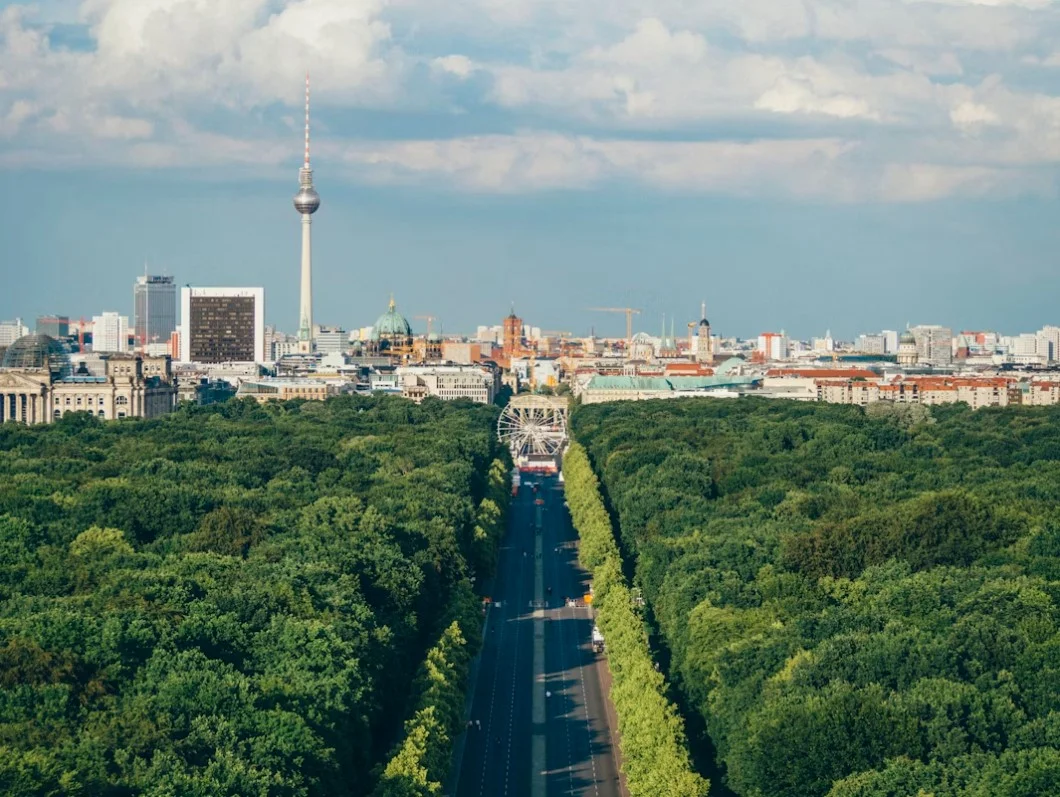
Berlin is not a city you simply visit. It’s a city you feel. It doesn’t beg to be loved — it challenges you to understand it. For every postcard landmark, there’s an unmarked side street full of stories. For every elegant boulevard, a graffitied courtyard hiding a gallery or microbrewery. To truly appreciate the Berlin top attractions, you need to embrace the chaos, the contrasts, and the confidence of a city that reinvented itself more than once.
Start with history. Few places in Europe bear the scars — and the triumphs — of the 20th century so vividly. Walk through the Brandenburg Gate, once a symbol of division, now one of unity. Just nearby is the Memorial to the Murdered Jews of Europe, a vast field of concrete stelae that demand silence and reflection. A short walk takes you to the Reichstag, the German parliament, whose glass dome offers both panoramic views and symbolic transparency.
No visit is complete without a moment at the Berlin Wall. While much of it has disappeared, the longest surviving stretch — the East Side Gallery — is now a powerful open-air art exhibit, with murals painted by international artists celebrating freedom and resilience. Rent a bike and ride the path where the Wall once stood. You'll pass playgrounds, cafés, and community gardens — living proof of the city’s evolution.
But Berlin isn’t frozen in memory. It pulses with energy. Cross the Spree River into Kreuzberg, a district known for its multicultural flair and rebellious spirit. This is where Turkish markets meet punk rock bars, where vegan bakeries sit beside döner stands, and where nights often start late — and end somewhere around sunrise. For younger travelers or anyone seeking culture after dark, Berlin’s nightlife is legendary. Techno temples like Berghain may grab the headlines, but smaller clubs like Sisyphos or Kater Blau offer more accessible, no-less-intense experiences.
If you’re more into museums than clubbing, head to Museum Island, a UNESCO World Heritage site on the Spree that houses five world-class institutions, including the Pergamon and the Neues Museum. Art lovers will also find gems in the Hamburger Bahnhof (contemporary art) and the Berlinische Galerie (modern German artists).
For something slower, wander through Tiergarten, Berlin’s green heart. It’s easy to forget you're in a capital city when you’re surrounded by lakes, meadows, and tree-lined paths. Grab a currywurst from a local stand and find a shady bench — Berlin is also about letting yourself breathe.
Transportation in Berlin is fast, efficient, and surprisingly affordable. But if you’re arriving by plane, especially late or with family, consider booking a Berlin airport transfer in advance. This ensures a smooth ride straight to your hotel, with no need to navigate ticket machines or late-night U-Bahn maps after a long flight. It’s a small luxury that saves time and stress.
Berlin is huge — one of Europe’s largest capital cities by area — so getting from one district to another can take longer than expected. Having a reliable transport option is key to maximizing your time.
For shorter rides or spontaneous journeys, the Berlin taxi network is vast and regulated. Reputable providers like Würfelfunk (which translates as “Dice Radio”) and TaxiFunk Berlin offer 24/7 service, clean vehicles, and fixed metered pricing. You can hail one on the street, use their app, or pre-book by phone. Most drivers speak some English, and the experience is generally smooth and professional.
Of course, if you're planning an intercity trip — say from Berlin to Dresden or Leipzig — AirportTaxis provides private transfers that are tailored to your needs. You choose the time, the route, the car class, and we take care of the rest.
What makes Berlin unforgettable isn’t just its monuments — it’s how the past and present coexist so vividly. One moment, you're standing where history was made. The next, you're dancing in a warehouse turned nightclub or sipping third-wave coffee in a space once marked by division. Berlin is the kind of city that doesn’t just change — it changes you.
| City | Airport Name | IATA Code | Distance from City Center | Notes |
|---|---|---|---|---|
| Berlin | Berlin Brandenburg Airport | BER | 27 km | Main airport for Berlin, modern and spacious |
| Hamburg | Hamburg Airport (Helmut Schmidt) | HAM | 8.5 km | Efficient hub for domestic & European flights |
| Munich | Munich Airport (Franz Josef Strauss) | MUC | 29 km | Major international hub, ranked among Europe’s best |
| Frankfurt | Frankfurt Airport | FRA | 12 km | Germany’s busiest airport, global connectivity |
| Cologne | Cologne Bonn Airport | CGN | 15 km | Popular with budget carriers and charter flights |
| Stuttgart | Stuttgart Airport | STR | 13 km | Medium-sized, mostly European connections |
| Düsseldorf | Düsseldorf Airport | DUS | 9 km | Business traveler favorite, excellent rail access |
Munich — What to Visit in Munich
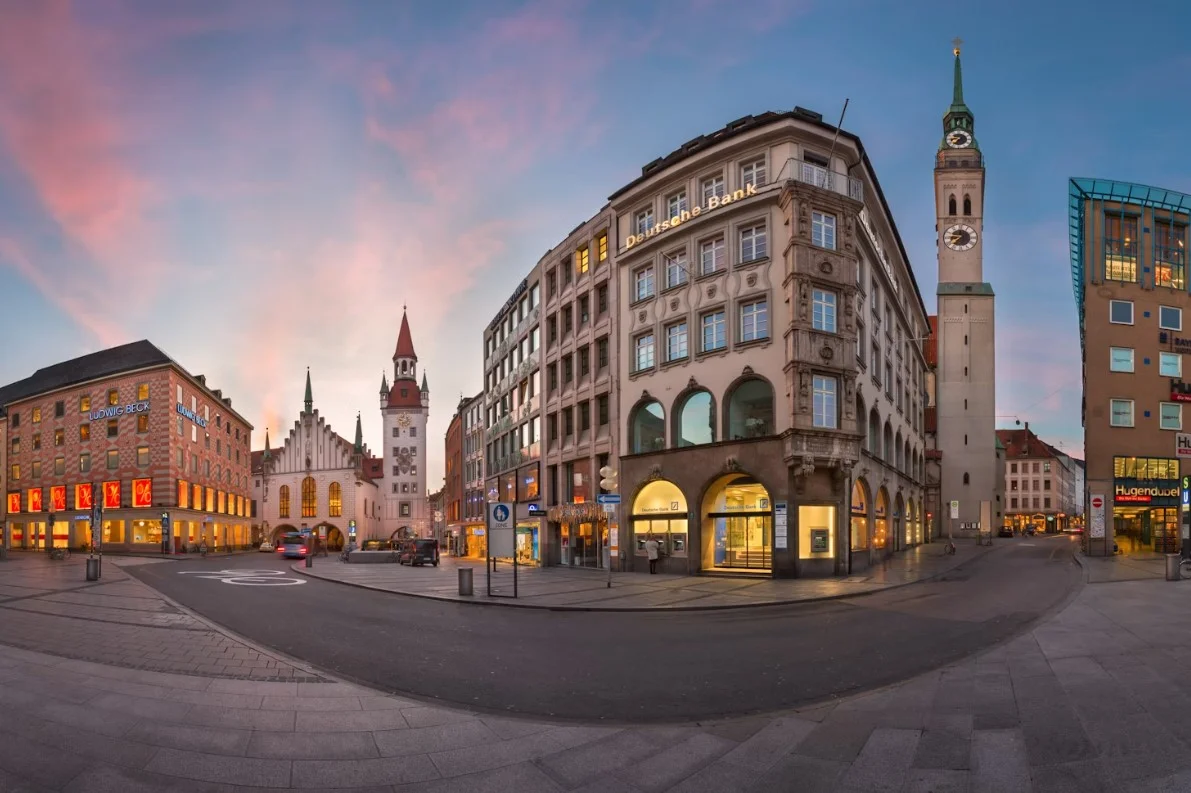
If Berlin is loud and electric, Munich is composed and elegant. But don’t be fooled — beneath the polished facades of Baroque churches and royal boulevards, this Bavarian capital knows how to enjoy life. From centuries-old beer halls to perfectly maintained English gardens, Munich invites you to slow down, soak in tradition, and let the rhythm of the city take over. Whether you’re here for a weekend or a week, there’s no shortage of ideas for what to visit in Munich.
Start your journey in Marienplatz, the heart of the Altstadt (Old Town), where the neo-Gothic New Town Hall (Neues Rathaus) dominates the square. If you’re lucky, you’ll catch the Glockenspiel chiming at 11 a.m. or noon — little mechanical figures dancing in the tower to celebrate local legends. Just across the square lies St. Peter’s Church, the oldest in the city. Climb its 299 steps (yes, it’s worth it) for panoramic views over red-tiled rooftops and, on a clear day, the Alps shimmering in the distance.
But Munich is more than postcard beauty. Walk a few blocks and you’ll find the Viktualienmarkt — an open-air gourmet market where locals buy cheese, spices, fruit, and flowers. Grab a pretzel, order a freshly grilled sausage, and take your seat at one of the communal benches under chestnut trees. The atmosphere is relaxed, social, and deeply Munich.
Art lovers will find plenty to marvel at in the Kunstareal, the city’s museum quarter. Three “Pinakothek” museums house everything from Old Masters to modern works, while the Brandhorst Museum showcases contemporary giants like Warhol and Cy Twombly. You don’t need to rush — Munich rewards a slower, curated pace.
Still, the city isn’t all culture and quiet. Head to the English Garden, one of the largest urban parks in Europe, and you’ll see surfers riding a standing wave on the Eisbach River — right in the middle of the city. Further into the park, people picnic, nap, play instruments, and drink beer from massive glass mugs at the Chinese Tower beer garden. No one is in a hurry, and neither should you be.
Speaking of beer: Munich is its global capital. Even if you’re not here during Oktoberfest, you can still visit legendary halls like Hofbräuhaus, where beer is served by the liter, and oompah bands play traditional music in rooms that haven’t changed in centuries. For a more local feel, check out Augustiner Bräustuben or Paulaner Bräuhaus — both beloved by Münchners.
Moving around the city is easy thanks to a clean and reliable U-Bahn system. But if you’re arriving or departing from the airport — especially with luggage or on a tight schedule — consider booking a Munich airport transfer. It’s a comfortable way to avoid the long S-Bahn ride and get directly to your hotel, apartment, or business meeting with minimal effort. Plus, it’s especially useful if you’re landing late or traveling with family.
Planning a day trip? Munich makes an ideal base. Within 90 minutes you can reach the Neuschwanstein Castle (yes, the fairytale one), the Alps for hiking or skiing, or lakes like Starnberger See and Tegernsee for a relaxing escape. Whether you use a rental car or book a private transfer, the surrounding region is as rewarding as the city itself.
When it comes to local transport, the Munich taxi system is among the most professional in Germany. Major companies like Taxi-München eG and IsarFunk operate 24/7, with well-maintained vehicles, uniformed drivers, and quick response times. You can call, book via app, or hail a cab directly from taxi stands, which are common in all central districts.
While local taxis are excellent for short rides — say, from your hotel to the museum quarter or out to dinner in Schwabing — travelers looking for day tours or intercity transfers often prefer a service like AirportTaxis. It offers flat rates, door-to-door convenience, and multilingual support — ideal if you’re heading to another city or need extra space for luggage.
In Munich, tradition meets sophistication, and every corner invites you to take part — whether you're sipping a cappuccino under Art Nouveau facades or raising a beer with strangers at a long wooden table. It's a city that embraces the old without clinging to it, and builds the new without forgetting its roots. And that, perhaps, is Munich’s quiet magic: nothing here is rushed, but everything runs beautifully on time.
| From – To | High-Speed Train | By Car (Average) | Private Transfer (Estimated) |
|---|---|---|---|
| Berlin – Hamburg | 1h 45min | 3h | 2h 45min |
| Munich – Nuremberg | 1h 15min | 1h 45min | 1h 30min |
| Frankfurt – Cologne | 1h 05min | 2h 00min | 2h 10min |
| Düsseldorf – Berlin | 4h 30min | 5h 45min | 5h 30min |
| Hamburg – Munich | 6h 00min | 7h 00min | 6h 30min |
| Stuttgart – Frankfurt | 1h 35min | 2h 15min | 2h 00min |
Cologne — Best Places in Cologne
Cologne isn’t loud about its beauty — but it leaves a lasting impression. This city, nestled along the Rhine River, is one of Germany’s oldest, yet it radiates a youthful, open-hearted energy. Locals call it “Kölle” with affection, and it’s not hard to see why. Whether you're here for the towering cathedral, a riverside stroll, or a glass of Kölsch with locals at a corner pub, Cologne is full of subtle charm. If you’re wondering about the best places in Cologne to explore, you’re about to discover why this city keeps pulling visitors back.
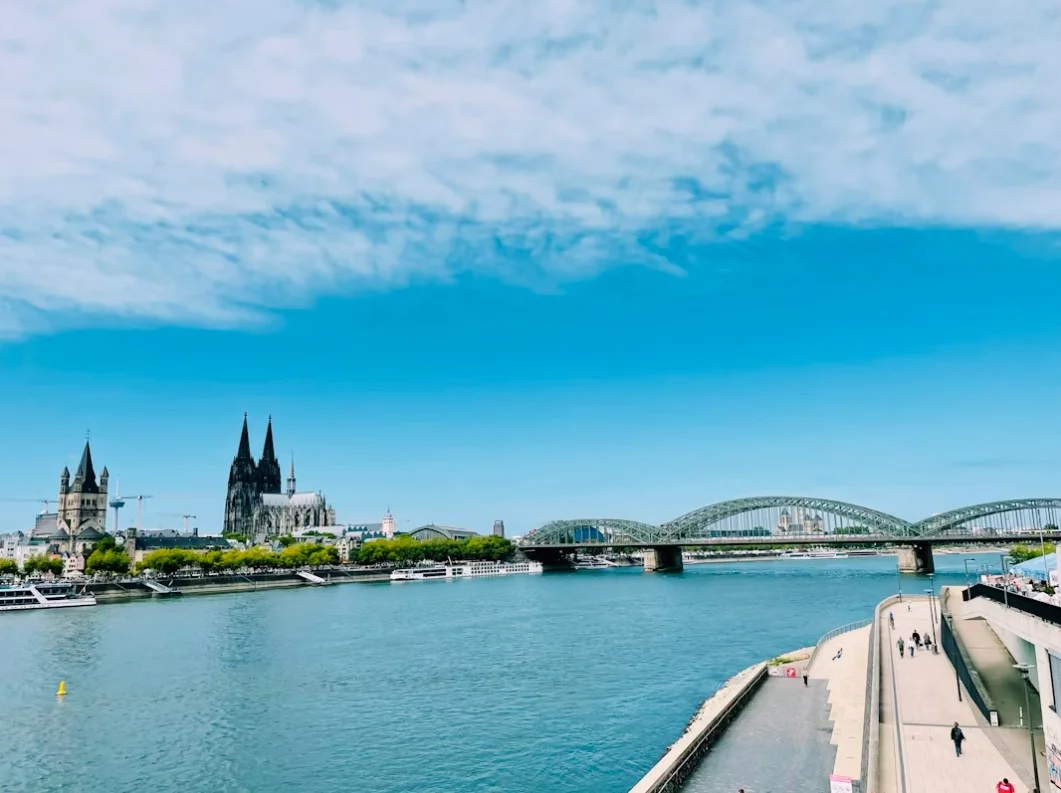
Your journey should begin, of course, with the Cologne Cathedral (Kölner Dom). Even if you’ve seen pictures, the real thing is overwhelming. It’s not just the height — though it is the tallest twin-spired church in the world — it’s the detail. Every stone of its gothic façade seems carved with purpose, every stained glass window glowing with centuries of devotion. Climb the 533 steps to the viewing platform, and you’ll be rewarded with a breathtaking panorama of the city and the Rhine cutting through it like a silver ribbon.
Just steps away, the Hohenzollern Bridge offers its own magic. Covered in thousands of love locks left by couples, it’s both a tourist spot and a quiet moment suspended above the river. Walk across it slowly. On one side, Cologne’s Old Town hums with life. On the other, modernity gleams — a reminder that this is a city always balancing past and present.
While you’re in the Old Town, take time to wander. The narrow cobbled streets hide charming breweries, artisan chocolate shops, and some of the best beer halls in the region. Pop into Früh am Dom or Päffgen for a classic Kölsch beer served in tall, narrow glasses. It arrives without ordering — and keeps coming until you cover your glass with a coaster. It’s a tradition, and part of what makes Cologne feel welcoming in the most human way.
Families and chocolate lovers should make a stop at the Schokoladenmuseum — Cologne’s famous Chocolate Museum. Located right on the waterfront, it offers interactive exhibits, a full-scale tropical greenhouse, and even a working chocolate fountain you can dip wafers into. Whether you're traveling with kids or simply have a sweet tooth, it’s a delightful, sensory escape.
When it’s time to move around the city or plan your departure, having reliable transportation is key. If you're flying in or out, a Cologne airport transfer offers convenience, especially if you have limited time or luggage in tow. Avoid the hassle of navigating the S-Bahn with bags and let a private driver take you directly to your hotel or gate. It’s also a smart option for early-morning departures or evening arrivals when public transport slows down.
For trips within the city, the Cologne taxi scene is dependable and safe. Vehicles are easy to find, especially near train stations and hotels, and service is typically fast and professional. One highly regarded option is Taxi-Ruf Köln, known for its large fleet and 24/7 availability. They also offer app-based booking, fixed fares to the airport, and credit card payments — useful if you're not carrying cash.
Of course, for longer journeys — say from Cologne to Bonn, Düsseldorf, or even Frankfurt — AirportTaxis provides private intercity transfers designed for comfort and reliability. You can expect punctual pickups, multilingual drivers, and a stress-free journey door to door.
Cologne’s soul reveals itself gradually. It’s in the warmth of strangers at a beer table, in the hum of street musicians along the river, in the scent of roasted almonds at a Christmas market, or the slow bells of the Dom echoing through the morning air. You don’t need a rigid itinerary here — just curiosity, time, and perhaps an open window looking out onto the Rhine.
So whether you’re here for a weekend break, passing through on a broader tour of western Germany, or starting your route south, don’t skip Cologne. It’s not just a place to visit — it’s a city to feel. And once you do, it might just stay with you longer than you expect.
Frankfurt — What to See in Frankfurt
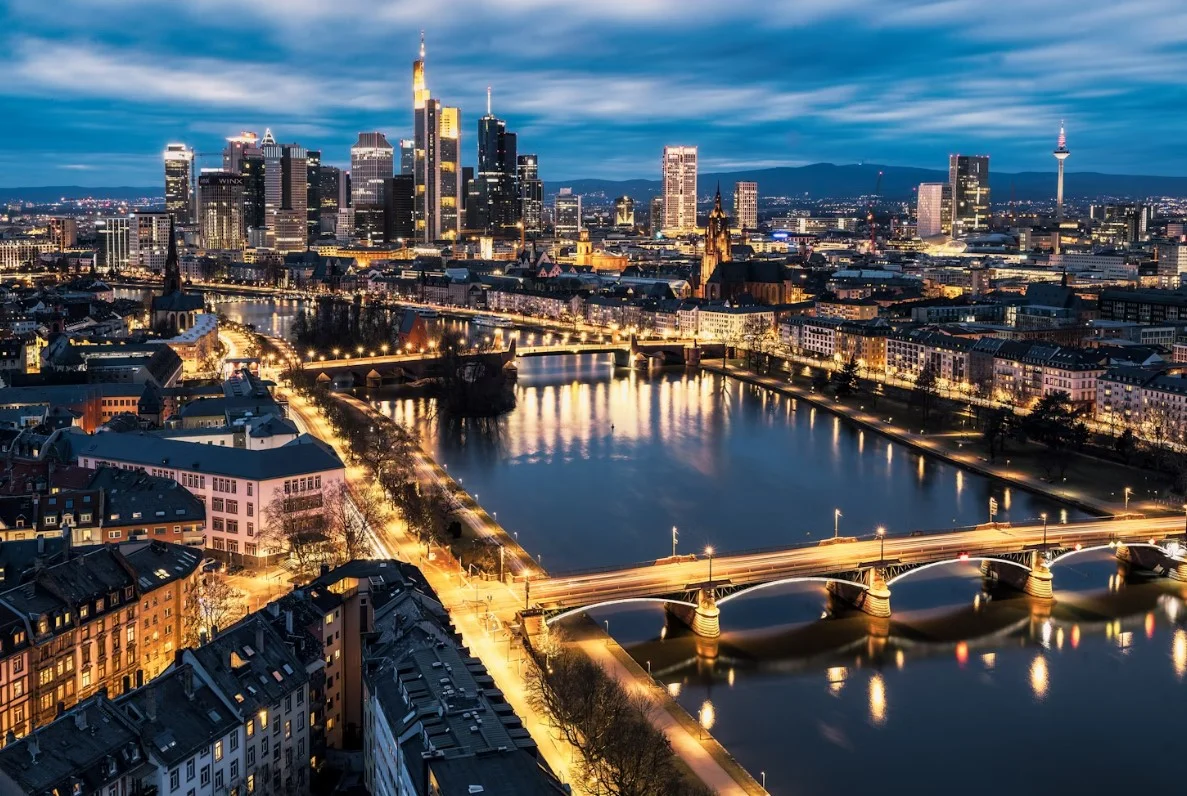
Frankfurt is a city of dualities. At first glance, it’s all steel and glass — Germany’s financial hub, home to the European Central Bank and a skyline more reminiscent of Chicago than Berlin. But look a little closer, and you’ll find quiet riverside paths, timber-framed houses, and a city that knows how to slow down between board meetings. If you’re wondering what to see in Frankfurt, think beyond business. This city has layers — and it rewards those who explore them.
Your visit should begin with a walk through the Alt-Sachsenhausen district — a neighborhood that feels like a step back in time. Cobbled streets, lantern-lit alleys, and traditional apple wine taverns (called Apfelweinwirtschaften) create a warm, inviting atmosphere. Order a glass of “Ebbelwoi” with Handkäs mit Musik (a pungent cheese dish) and you’ll instantly feel the city’s quirky charm come alive.
From there, cross the Main River via the pedestrian Eiserner Steg — a wrought-iron bridge covered in love locks — and you’ll land directly in the historic heart of the city. The Römerberg square is Frankfurt’s fairy-tale corner, with pastel half-timbered buildings and the iconic Town Hall that’s been in use since the 15th century. During the Christmas season, this square transforms into one of Germany’s most atmospheric markets, filled with twinkling lights, hot mulled wine, and hand-carved wooden ornaments.
Culture lovers should head to the Museumsufer, or Museum Embankment, where a string of world-class institutions line the riverbanks. Don’t miss the Städel Museum, one of Europe’s oldest and most respected art museums, with works ranging from Old Masters to contemporary greats. Across the water, the Schirn Kunsthalle regularly hosts cutting-edge exhibitions that challenge and inspire.
For a panoramic contrast, ride the elevator up the Main Tower. At 200 meters tall, it’s not just an observation deck — it’s a complete change of perspective. From here, you can see the entire city grid stretching into the countryside, and on clear days, the Taunus Mountains frame the skyline with soft blue outlines.
While Frankfurt is compact enough to explore on foot or by U-Bahn, don’t underestimate the comfort of a Frankfurt airport transfer — especially if you're arriving on a long-haul flight or departing early. With Germany’s busiest airport just 15 minutes from the city center, transfers offer a stress-free alternative to navigating unfamiliar transit routes with luggage in tow.
And if your time is limited, a private transfer ensures you squeeze every moment out of your stay. Heading to a conference at Messe Frankfurt or arriving for a layover tour? AirportTaxis offers fast, flexible, and professional solutions tailored to business travelers and leisure visitors alike.
Within the city, the Frankfurt taxi network is reliable and easy to use. Licensed cabs are cream-colored, metered, and can be hailed on the street or found at designated taxi stands. One of the most trusted operators is Taxi Frankfurt am Main, which offers app-based booking, English-speaking dispatchers, and airport flat rates — a useful option if you're traveling outside of regular hours or prefer to pre-book a ride.
Not far from the city’s hustle, you’ll find surprising oases. The Palmengarten, a botanical garden founded in 1871, invites you into a world of tropical plants, palm trees, and peaceful glasshouses. Or stroll along the riverside paths of the Mainkai — ideal for a quiet moment at sunset or a casual jog before breakfast.
For shoppers, Frankfurt doesn’t disappoint. The Zeil is one of Germany’s busiest shopping streets, lined with flagship stores and multi-level malls. For something more boutique, head to Berger Straße in Bornheim — full of local cafés, design shops, and street charm that’s a world away from high finance.
Frankfurt might be famous for its business card exterior, but at its core, it's a city full of contrast and character. It’s where skyscrapers and storybooks collide, where international flavor meets regional tradition, and where a 15-minute walk can take you from executive suites to taverns humming with folk songs.
Whether you're just passing through or making Frankfurt your base for a multi-city adventure across Germany, this city offers far more than meets the eye. All it asks is that you take the time to look.
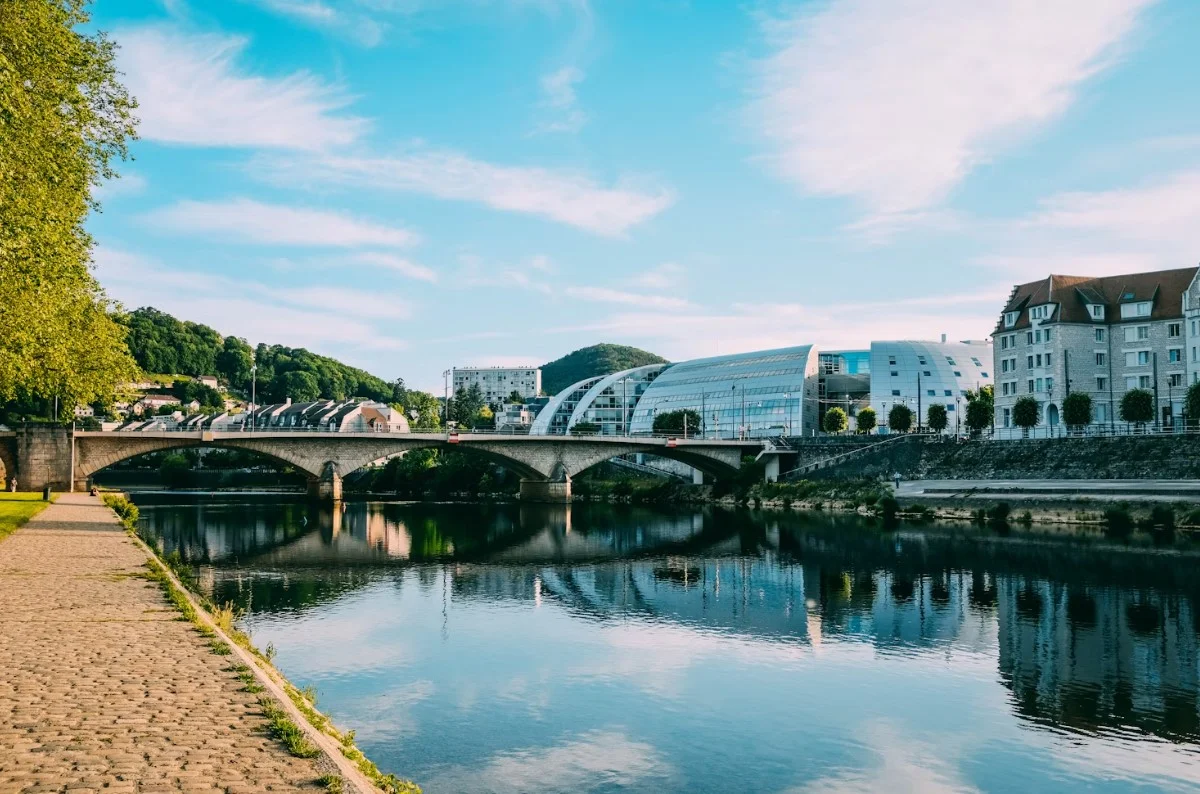
Dusseldorf — Things to Do in Dusseldorf
Düsseldorf doesn’t try to be Berlin or Munich — and that’s exactly its charm. It’s stylish without being flashy, cultured without being stuffy, modern without losing its warmth. From the sleek storefronts of Königsallee to the minimalist zen of its Japanese Quarter, Düsseldorf blends old and new in a way few cities manage. If you’re looking for truly unique things to do in Dusseldorf, prepare to be surprised — and a little seduced.
Start your exploration on the Rheinuferpromenade, a vibrant waterfront path where locals jog, cycle, stroll with ice cream in hand, or sit with friends watching boats glide by on the Rhine. Lined with cafés, leafy plazas, and views that shift with every step, it’s the perfect way to settle into the city’s rhythm. At sunset, the promenade glows — and the whole riverfront feels like a living postcard.
Just steps away is the Altstadt, Düsseldorf’s compact but lively Old Town. Known as “the longest bar in the world” thanks to its dense concentration of breweries and pubs, it’s the place to try Altbier, a local dark beer served in small, cold glasses. Step into Uerige or Füchschen for a real taste of Rhineland tradition — including waiters who don’t ask if you want another beer, they just bring it until you say stop.
If fashion is your language, you’ll find fluency on Königsallee, or “Kö” as locals call it. This tree-lined boulevard with its central canal is Düsseldorf’s most elegant street — home to luxury brands, polished boutiques, and high-end galleries. But even if you’re not here to shop, it’s worth visiting for the architecture and the people-watching: business travelers, designers, and creative locals all crossing paths.
For a completely different mood, head south to MedienHafen, the city’s revamped harbor district. Here, bold architecture by Frank Gehry and others rises alongside design agencies, rooftop bars, and stylish restaurants. It’s a reminder that Düsseldorf isn’t just about tradition — it’s a city with one foot firmly in the future.
Art lovers will feel at home in Düsseldorf. The Kunstsammlung Nordrhein-Westfalen (K20 and K21) features 20th- and 21st-century masterpieces, while smaller venues like Kunsthalle and KIT (Kunst im Tunnel) offer edgy, experimental work. And just walking the city is an artistic experience — Düsseldorf values public art and design in a way that feels deeply integrated into daily life.
One of the most unique cultural experiences is found in the city’s Japanese Quarter — one of the largest in Europe. Located around Immermannstraße, this district offers authentic ramen shops, book stores, bakeries, and supermarkets that transport you to Tokyo in just a few blocks. Try Naniwa for noodles or shop for matcha sweets at Bakery Taka — it’s a hidden gem in plain sight.
Getting to and from the city is simple, especially if you choose a Dusseldorf airport transfer. With Düsseldorf Airport just 20 minutes from the city center, booking a private ride ensures you don’t waste time figuring out transit options — particularly if you're arriving late, with heavy luggage, or during a trade fair (when taxis can be scarce). Our transfers offer comfort, fixed pricing, and English-speaking drivers who meet you right at arrivals.
And while public transport in Düsseldorf is efficient, there are times when nothing beats the ease of a taxi. The Dusseldorf taxi network is well-developed, with regulated fares and helpful drivers. One of the most respected services is RheinTaxi Düsseldorf, known for its clean vehicles, fast response, and 24/7 service — ideal whether you need a late-night pickup or a quick ride across town. You can hail a cab on the street, call, or use their app to book in advance.
And if your plans take you beyond the city — to Cologne, Essen, or even Belgium — AirportTaxis can provide private intercity transfers that are smooth, direct, and customized to your itinerary.
Düsseldorf is a city that welcomes detail. It’s not overwhelming, yet it’s never dull. It whispers rather than shouts, and those who listen discover a place that’s layered, surprising, and easy to love. Whether you’re sipping Altbier by the river, admiring avant-garde architecture, or browsing shelves of Japanese manga, you’re not just visiting — you’re part of the scene.
So if your German itinerary needs a city that balances style with soul, design with heritage, and urban energy with genuine charm — look no further. Düsseldorf is ready when you are.
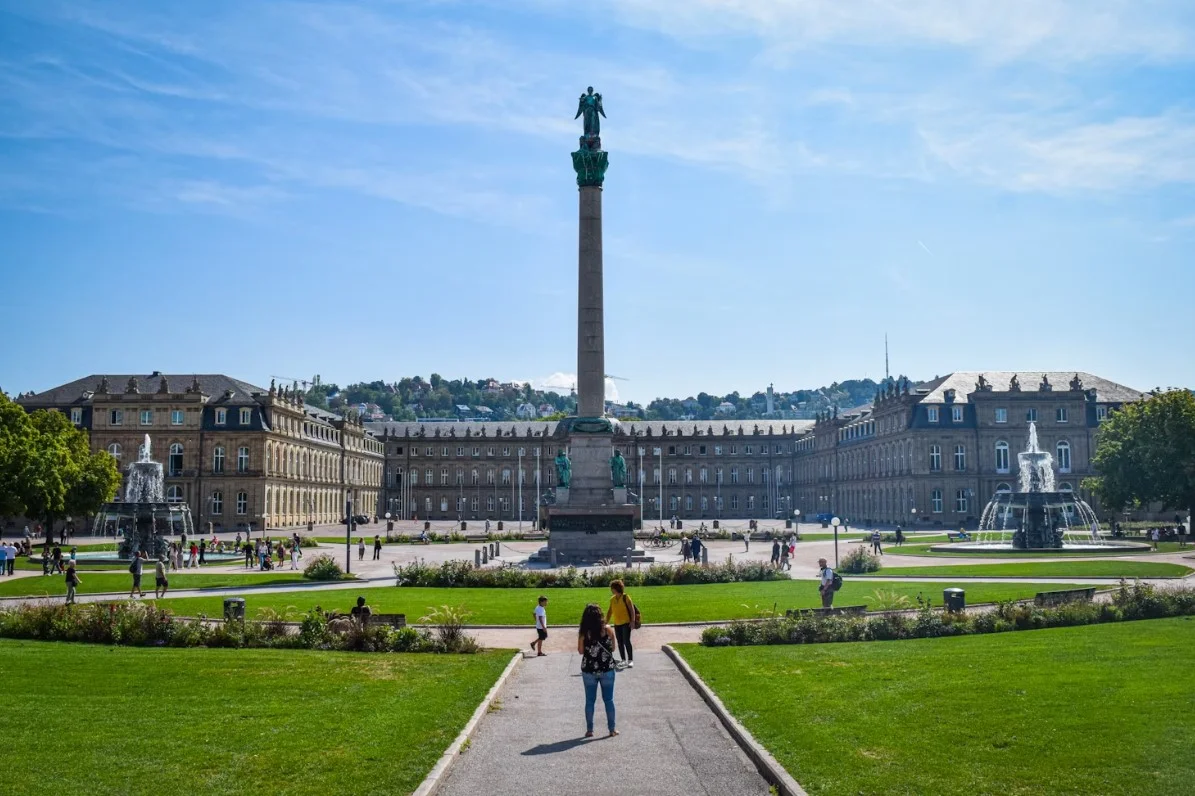
Stuttgart — Stuttgart Points of Interest
Stuttgart may not always be the first name on a traveler’s list — but those who visit know its secret: this is a city that grows on you. It’s a place where precision engineering meets rolling vineyards, where art galleries sit next to mineral spas, and where the scent of fresh pretzels drifts down leafy residential streets. If you're looking to go beyond the obvious and discover authentic, unexpected beauty, these Stuttgart points of interest will surprise you.
The city's most iconic landmarks are, perhaps unsurprisingly, automotive. Stuttgart is home to both Mercedes-Benz and Porsche — and the museums bearing their names are nothing short of stunning. The Mercedes-Benz Museum is an architectural spiral that walks you through more than 130 years of automotive innovation, social history, and elegant design. Whether or not you're a car lover, you’ll be drawn in by the storytelling and sheer beauty of the exhibits.
Across town, the Porsche Museum delivers a very different but equally striking experience: bold lines, speed, and an unmistakable brand identity. It’s smaller, more adrenaline-driven — a perfect complement to the calm polish of the Mercedes complex. Both are perfect for families, tech enthusiasts, or anyone curious about how Stuttgart helped shape mobility as we know it.
But Stuttgart is more than chrome and horsepower. The city itself is nestled in a green valley, with vineyards creeping down into residential streets and wooded hills rising on all sides. One of the best ways to understand its geography — and its soul — is by climbing the Stuttgart TV Tower (Fernsehturm). At 216 meters high, it offers stunning views across the city and beyond. On clear days, you can see the Swabian Jura to the south and the Black Forest to the west.
Prefer to stay grounded? Wander through the Wilhelma, Stuttgart’s unique combination of botanical garden and zoo, originally built as a Moorish-style royal retreat. Or stroll through Rosenstein Park, part of one of the largest inner-city park systems in Europe. Here, locals jog, picnic, walk dogs — and escape the busy world just a few steps from the center.
Speaking of the center, Stuttgart-Mitte is a blend of modern shopping streets, open squares, and the elegant Schlossplatz, the main square crowned by the baroque New Palace. Grab a seat at a café and watch the city breathe: students with backpacks, professionals on bikes, retirees with shopping bags — Stuttgart at its unfiltered best.
To get around smoothly, especially if you're flying in or out, a Stuttgart airport transfer can be a real game-changer. The airport lies just south of the city, and while there’s a light rail line, a private ride offers direct access to your hotel or meeting point — particularly valuable if you're traveling with bags, kids, or on a tight schedule. AirportTaxis offers fixed-price transfers with English-speaking drivers and executive-class comfort for both business and leisure travelers.
And within the city, the Stuttgart taxi scene is both professional and efficient. You’ll find designated taxi ranks at stations, hotels, and major intersections, but pre-booking is also easy. One of the top-rated local services is Taxi Auto Zentrale Stuttgart, offering 24/7 dispatch, app-based booking, and a reputation for reliability. Their fleet includes eco-friendly vehicles and multi-language support — a reassuring option if you prefer personal service over public transit.
And Stuttgart is also a city of taste. Venture into the surrounding hills and you’ll find Weinstube — rustic wine taverns serving local varietals like Trollinger and Lemberger. These aren't tourist traps; they’re gathering places for friends, families, and neighbors. Pair your glass with Swabian specialties like Maultaschen (think German ravioli) or Spätzle with melted cheese, and you’ll understand what gemütlich truly means.
Want to blend urban and nature in a single moment? Take the Zacke — a cogwheel railway — up to Degerloch and watch the city unfold beneath you. Or hike the Stäffele, a series of hillside stairways that snake through hidden neighborhoods, revealing gardens, tiny wine cellars, and panoramic views with each turn.
Stuttgart is a city built on motion — but it knows the value of stillness. It’s where a global brand is born and a glass of Riesling waits at the top of the hill. Where innovation lives side by side with family tradition. And where visitors quickly learn that slowing down is part of the experience.
If your journey through Germany needs a stop that’s calm but confident, worldly but grounded, then Stuttgart should be on your list. It’s not just about what you see here — it’s how the city makes you feel.
How to Travel Between Cities in Germany
One of the reasons Germany is such a joy to travel through is its world-class transportation network. Whether you're moving between major cities like Berlin, Munich, and Frankfurt, or exploring lesser-known gems like Heidelberg or Lübeck, getting from A to B is easy, fast, and (mostly) stress-free. That’s why building a multi-city itinerary is not only possible — it’s encouraged.
Let’s break down the best options for intercity transfers in Germany, so you can choose what works for your style, pace, and budget.
Train Travel: Fast, Reliable, and Scenic
Without question, German train travel is among the best in Europe. The Deutsche Bahn (DB) network connects every major city and region with high-speed (ICE), intercity (IC), and regional trains. The ICE trains are sleek, quiet, and fast — with speeds reaching up to 300 km/h. Berlin to Frankfurt? About 4 hours. Hamburg to Cologne? Roughly the same. You’ll glide past forests, rivers, half-timbered villages, and wind turbines — it’s a journey as much as a destination.
If you book early, you can score great “Sparpreis” (saver) fares, sometimes as low as €17.90 per leg. Trains offer reserved seating, free Wi-Fi, power outlets, food service, and even quiet cars if you want to work or rest. And with centrally located stations in most cities, it’s easy to step off the train and walk straight into the city center.
One tip: bring a digital or printed copy of your ticket, and don’t forget to validate regional train passes when required — inspectors check regularly.
FlixBus and Long-Distance Buses: Budget-Friendly Options
If you're on a tight budget or planning last-minute, long-distance buses like FlixBus or BlaBlaBus are solid choices. They’re slower than trains, but often significantly cheaper. Most have free Wi-Fi, USB charging, and reclining seats. Bus stations may not always be as central as train stations, but they're usually close to public transit hubs. For example, Munich’s bus terminal is just steps from Hackerbrücke S-Bahn station.
This option is ideal for students, solo travelers, or those who don’t mind trading time for savings.
Private Airport Transfers: Door-to-Door Comfort
Sometimes, convenience is everything — especially after a long flight or before an early departure. A private airport transfer in Germany offers a reliable, stress-free way to move between cities, hotels, or even international borders. Whether you're traveling with family, a group, bulky luggage, or just prefer peace of mind, this option delivers.
With AirportTaxis, you get fixed rates, personalized pickup, and clean, comfortable vehicles. No figuring out train connections, no hauling suitcases across platforms. Just meet your driver and go. You can pre-book online, get instant confirmation, and rest easy knowing someone is tracking your arrival time in real-time — even if your flight is delayed.
This is especially useful when you're arriving late or flying into one city and continuing directly to another. For example, flying into Frankfurt and heading to Stuttgart? A private transfer saves you a station change and two hours of train logistics.
How to Get From Airport to City Center
Every major German airport is well connected to public transport, but navigating it after a red-eye flight can feel overwhelming. Here's a quick breakdown:
- Frankfurt Airport: 15 minutes by S-Bahn to central station or ~20 minutes by private transfer
- Berlin Brandenburg: 30–40 minutes to the center by regional train or ~45 minutes by car
- Munich Airport: 40 minutes by S-Bahn to Hauptbahnhof or ~35 minutes by private transfer
- Dusseldorf Airport: Connected by SkyTrain and local rail, ~20 minutes to city center
If you're carrying luggage, traveling with children, or just value your energy, a pre-booked transfer may be the best solution. It’s a small upgrade that pays off in peace of mind.
Final Thoughts: Mixing and Matching
Germany is a country built for modular travel. Want to hop city to city by train and use transfers for the “in-between” moments? Perfect. Want to take a scenic train to Munich, then ride comfortably to Salzburg or Zurich with a driver who meets you at the hotel? Also perfect. The trick is to build your route based on what you want to experience — not just what’s on the map.
And the best part? Whatever route you choose, you’ll find a system designed to support you — with trains that run, drivers who wait, buses that cost less than lunch, and roads that unfold like postcards.
So pack light, keep your camera handy, and get ready for a smooth ride. Germany is calling — and getting there is half the fun.
Conclusion — Build Your Own Journey Through Germany
So, which are the best cities to visit in Germany? The answer depends on who you are — and how you travel.
If you’re drawn to history, Berlin will move you. If you're searching for elegance and tradition, Munich might feel like home. Cologne speaks to the heart, Hamburg to the soul, Frankfurt to the mind. Düsseldorf? It’s for the eye — a place where style meets substance. And Stuttgart wraps it all in vines and engines, where calm meets innovation.
But the real magic lies not in choosing just one — it’s in stringing them together into your own journey. Germany’s diversity of cities makes it perfect for a customized adventure: two nights here, three nights there, a scenic train in between, a private car when you want more control, and spontaneous moments that become lifelong memories.
Plan Smart, Travel Easy
Each city on your route has its rhythm. Some are fast and international, others local and laid-back. But all are connected by an infrastructure that works — trains that run, roads that glide, drivers that arrive when they say they will. That means you can focus on the experience, not the logistics.
Want to spend a weekend hopping between museums and beer gardens? Or slow down and explore neighborhoods with no name on the map? It's your story. And with a mix of public transport and private airport transfer in Germany, you can shape it around what matters most to you: comfort, time, flexibility — or simply the freedom to enjoy the ride.
Our suggestion? Combine 3 or 4 cities into a 10-day loop. Start in Frankfurt or Berlin (both major international hubs), then move south to Munich or west to Cologne. Use high-speed trains for the long legs. Then, when the connections get tricky — or you just want a break from station crowds — let a private driver take over. It’s easier than you think, and far more relaxing than juggling multiple transfers.
And if you're arriving in one city and flying out of another, even better — point-to-point travel is what this country does best.
Small Touches That Make a Big Difference
What separates a good trip from a great one? Often, it’s not the museums or the meals. It’s the small moments: arriving at your hotel without stress, having someone help with your bags after a red-eye flight, discovering a quiet vineyard road you’d never find on a tourist map.
With AirportTaxis, our goal is simple — to be part of those small moments that make your journey smoother, safer, and more enjoyable. Whether it's a private airport transfer in the early morning or a cross-country ride with views of castles and countryside, we help connect the dots between your destinations. Comfortably, reliably, and with a human touch.
You don’t need to rush. You don’t need to see everything. But you should see enough to feel like you've touched the real Germany — the warmth behind the efficiency, the stories behind the skyline, the flavor behind every neighborhood.
Top Cities in Germany to Visit — and to Remember
- Berlin: history, art, nightlife
- Munich: tradition, mountains, beer
- Cologne: romance, cathedral, charm
- Hamburg: water, architecture, soul
- Frankfurt: skyline, culture, global pulse
- Düsseldorf: fashion, art, cosmopolitan living
- Stuttgart: vineyards, engines, views
Choose your route. Take your time. And let every city show you something new — not just about Germany, but about yourself as a traveler.
This isn’t just a list. It’s an invitation. The top cities in Germany to visit aren’t just destinations — they’re stages of a journey that’s as unique as you are.
And the best part? The road between them is just as memorable as the cities themselves.
Frequently Asked Questions About Visiting Germany
1. What are the best cities to visit in Germany for a first-time traveler?
If it’s your first time in Germany, consider starting with Berlin, Munich, and Cologne. These cities offer a mix of history, modern culture, and accessibility. Each has its own personality — Berlin is edgy and historic, Munich is elegant and traditional, and Cologne is warm and welcoming. They're well-connected and ideal for a balanced itinerary.
2. How do I move easily between German cities?
Germany has a reliable and extensive train network (Deutsche Bahn), but for those seeking more flexibility or comfort, especially with luggage or tight schedules, private airport transfer Germany services are a convenient alternative. They’re perfect for door-to-door transport — from airport to hotel, or from one city to the next, especially if you want to avoid station crowds or connections.
3. Is it better to fly or take a train between major cities?
For short to medium distances (e.g., Berlin–Hamburg, Munich–Stuttgart), trains are often faster and more scenic than flights. However, if you're flying into one city and departing from another, combining high-speed trains with a Germany airport taxi service can create a seamless travel loop. Booking a private driver also allows stops along the way — something planes can’t offer.
4. Which German city is best for art and culture?
Berlin has the richest mix of galleries, museums, and alternative culture. But don’t overlook Düsseldorf for modern art lovers, or Munich for its grand opera and classic collections. Many cities also host seasonal art festivals — check local calendars to plan accordingly.
5. How do I get from the airport to the city center?
All major German airports offer public transit and taxis, but if you’re arriving late, traveling with kids, or carrying heavy luggage, a private transfer from the airport is the most comfortable option. You’ll be met at the terminal and taken directly to your accommodation — no need to navigate bus schedules or language barriers after a long flight.
6. Are German taxis expensive?
Taxis in Germany are reliable but can be costly for long distances. For inner-city rides they’re great, but for airport transfers or intercity travel, booking a private taxi in Germany ahead of time is often more affordable — especially for families or small groups. Fixed prices and advance booking make costs predictable.
7. What’s the best time of year to visit German cities?
Spring (April–June) and early autumn (September–October) offer mild weather, beautiful scenery, and fewer tourists. December is magical thanks to Christmas markets in cities like Cologne and Munich. If you’re planning to drive between cities or use private airport transfer services in Germany, avoid winter storms in January–February unless you're well-prepared.
8. Is it safe to travel around Germany solo?
Absolutely. Germany is one of Europe’s safest countries for solo travel, including for women. Public transport is secure, and drivers of licensed transfer services are vetted. Still, use common sense — especially in nightlife areas or during large festivals. Booking a trusted transfer for nighttime arrivals or unfamiliar destinations adds extra peace of mind.
9. Do I need to speak German to travel around?
No, but knowing a few basic phrases helps. English is widely spoken in hotels, airports, and restaurants. Most transfer drivers also speak basic English or offer multilingual support, especially those offering airport taxi Germany services for international clients.
10. Can I customize my travel itinerary with stops along the way?
Yes — and that’s where private transfers in Germany shine. Unlike trains or buses, you can request scenic stops, detours to lesser-known towns, or even lunch in a countryside village. Many travelers use this flexibility to explore castles, vineyards, or lakes between the top cities in Germany. It turns travel time into part of the adventure.